Parliament ratifies budget questions as government faces countdown to defend 2026 National Budget.

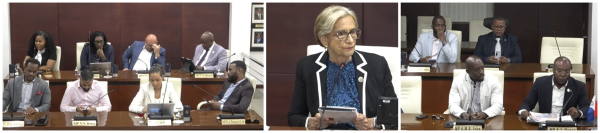
sarahwescotwilliams06072026PHILIPSBURG:---  Members of Parliament on Monday ratified the final report containing the extensive questions posed during the Central Committee examination of the draft 2026 National Budget, officially sending the document to the Government and triggering the next phase of the budget approval process.

The ratification means the Council of Ministers and the various ministries must now prepare comprehensive responses to hundreds of questions raised by Members of Parliament before the draft budget returns to the floor for public debate.

During Monday's continuation of Central Committee Meeting No. 23, Parliament Chair Sarah Wescot-Williams confirmed that while August 4 had initially been proposed as the date for the public handling of the budget, the timetable is now contingent on the Government's ability to prepare answers to the unprecedented volume of questions submitted by MPs.

The Chair explained that once the report was ratified and officially transmitted, Parliament would immediately consult with the Government to determine whether the previously proposed two-week preparation period remains realistic.

"It is not Parliament's insistence on the date," the Chair explained, noting that once Government indicates how much time is required to prepare its responses, Parliament will adjust the schedule accordingly and notify Members without delay.

MP Calls for more realistic timeline

The discussion largely centered on concerns raised by MP Darryl York, who questioned whether the proposed schedule gives the Government sufficient time to respond adequately to the unusually large number of questions submitted during the budget review.

York argued that Parliament should adopt a more proactive approach rather than waiting for the Government to request additional time.

He maintained that if the original two-week period was already considered tight before the final report was compiled, it would almost certainly be insufficient after the addition of what the Chair herself described as an "extraordinary amount of questions."

York also proposed that Members of Parliament receive 24 to 48 hours to review final reports before being asked to ratify them, allowing legislators adequate time to study complex budget documents before voting.

Chair acknowledges unprecedented workload

Responding to the concerns, Chair Wescot-Williams acknowledged that the 2026 budget review has generated one of the most comprehensive reports Parliament has handled.

She explained that while Central Committee reports are normally ratified during the same meeting in which discussions conclude, the sheer volume of questions submitted by Members made this year's process exceptional.

The Chair said Parliament would take York's suggestions into consideration for future proceedings, particularly where unusually lengthy reports require additional review time by Members before ratification.

Government now under pressure

With the report officially ratified, attention now shifts to the Government, which must prepare detailed written responses covering every ministry and every policy area questioned by Parliament.

The answers are expected to address key issues surrounding government spending, revenue projections, capital investments, staffing, economic development, justice, healthcare, education, infrastructure, and numerous policy initiatives contained in the draft 2026 National Budget.

Only after those responses are submitted will Parliament proceed with the public debate, where Members will determine whether the draft budget should ultimately receive legislative approval.

Monday's meeting formally concluded after the report was ratified, marking another important milestone in what has become one of the most closely scrutinized budget processes in recent years.


Saint-Martin pushes for stronger Caribbean Integration at Regional Cooperation Summit.

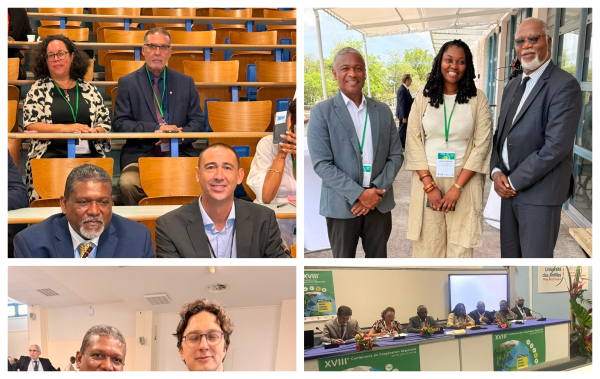
ccrg06072026MARIGOT/PHILIPSBURG:--- The Collectivité of Saint-Martin is intensifying its efforts to strengthen its economic and political ties within the Caribbean after President Louis Mussington and First Vice-President Alain Richardson represented the island at the 18th Conference on Regional Cooperation of the French West Indies and Guiana (CCRAG), held in Martinique from July 1 to 3.
The high-level conference, organized by the French State, brought together Caribbean leaders, regional organizations, and French officials to address common challenges affecting the region, including economic uncertainty, transportation, healthcare, environmental threats, and security.
Speaking before France's Minister for Overseas Territories Naima Moutchou, Martinique President Serge Letchimy, and regional delegates, President Mussington stressed that cooperation between Caribbean territories often advances through practical action before legal frameworks are established.
He noted that Saint-Martin's unique geopolitical position, both European and Caribbean, requires innovative approaches to better integrate the island economically with its neighboring territories. He also emphasized that greater participation in regional institutions and programs, such as Interreg Caribbean, is essential to expanding Saint-Martin's opportunities for growth and cooperation.
One of the major concerns highlighted by Mussington was the region's transportation and connectivity challenges.

He argued that improving inter-Caribbean connectivity remains one of the most important prerequisites for sustainable economic development. Improved air and sea connections would facilitate the movement of both people and goods, strengthening regional trade and commercial exchanges.
The president also identified several pressing issues confronting Caribbean nations, including the widespread invasion of sargassum seaweed, healthcare challenges, and employment opportunities. During discussions on sargassum, delegates concluded that the environmental crisis requires coordinated international political, scientific, and economic governance rather than isolated national responses.
A significant contribution from Saint-Martin during the conference was the organization of a specialized workshop dedicated to Creative and Cultural Industries (CCI) and Regional Cooperation, led by First Vice-President Alain Richardson.
The workshop examined how investment in culture, film, arts, and other creative sectors can become a powerful economic engine throughout the Caribbean.

Delegates noted that in several Caribbean economies the creative sector already plays a substantial economic role. Arts and culture account for approximately 6.4 percent of Gross Domestic Product in both Jamaica and the Dominican Republic, while the film industry alone generates an estimated US$210 million annually, demonstrating the sector's capacity to create employment, stimulate investment, and diversify regional economies.
The discussions brought together representatives from the Organization of Eastern Caribbean States (OECS), Business France, the Chambers of Commerce of Guyana and Martinique, regional development agencies, and Saint-Martin film producer Joël Ayuk, who explored opportunities to better organize and strengthen the Caribbean's creative industries.
Richardson emphasized that cultural and creative industries should be viewed not only as artistic endeavors but also as strategic economic tools that can strengthen tourism, create employment, and expand Saint-Martin's regional influence.
At the conclusion of the workshop, Richardson presented a summary document containing practical recommendations directly to Overseas Minister Naima Moutchou for consideration by the French Government.

Beyond economic cooperation, France also convened a regional security conference alongside the CCRAG, bringing together Caribbean governments to discuss common security challenges. The outcomes of those discussions were later integrated into the main conference, reinforcing the importance of deeper cooperation between French Caribbean territories, neighboring Caribbean states, France, and the European Union.
Closing the conference, Minister Naima Moutchou pledged that the French Government would actively follow up on the recommendations emerging from the three-day meeting. She committed to ensuring that concrete measures would be developed based on the conference's conclusions, and reiterated that the creative and cultural industries are among the Caribbean's most promising sectors for generating jobs, economic growth, and regional influence.

Budget process under fire as MPs challenge rushed review of 292-page report.

parliamentsxm06072026PHILIPSBURG:--- The handling of St. Maarten's 2026 national budget came under renewed scrutiny on Monday when members of Parliament openly questioned the pace at which they were being asked to approve a 292-page report containing hundreds of questions submitted during the Central Committee examination of the Draft National Ordinance Budget 2026.

What was expected to be a procedural meeting to ratify Parliament's final report quickly evolved into a heated debate over transparency, parliamentary oversight, and whether legislators were being afforded sufficient time to properly review one of the country's most important financial documents.

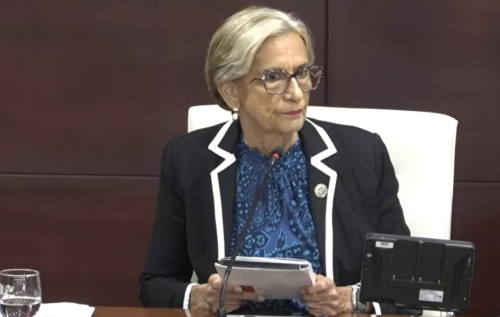
Chairlady of Parliament Sarah Wescot-Williams began the meeting by outlining the next steps in the legislative process, stressing that Parliament was not debating the budget itself, but rather ratifying the comprehensive report of questions submitted by Members of Parliament. That report will be forwarded to the Council of Ministers, which is expected to provide written responses before the budget advances to a public meeting.

Wescot-Williams explained that Parliament hopes to receive the government's responses by July 20, although she emphasized that this timeline has not been confirmed by the government.

"It is not the government that has indicated this will happen," she said. "We are anticipating that this could happen. It is up to the government to indicate when the answers can be provided."

Should the responses arrive within that timeframe, Parliament intends to begin the public debate on the 2026 budget on August 4, although the Chair acknowledged that several MPs have already indicated they may not be available due to the parliamentary recess.

She further explained that handling the budget in early August would effectively shorten Parliament's annual recess by one week.

The Chair also praised Parliament's Secretariat for producing what has become one of the most extensive parliamentary reports in recent history.

The document now spans 292 pages, incorporating questions submitted both in writing and orally by Members of Parliament during previous budget discussions. Wescot-Williams acknowledged that an earlier version distributed to MPs had inadvertently omitted part of the Opposition faction's submission but said the revised document had since been corrected.

Nevertheless, several MPs immediately questioned whether they could responsibly approve such an extensive document after receiving the final version only hours before the meeting.

Doran: "This is not the way we should handle the people's business"

MP Egbert Jurendy Doran was among the first to object, arguing that Members had received the original report shortly before midnight and an amended version only hours before Monday's meeting.

Doran questioned why Parliament was placing unnecessary pressure on its own Secretariat and on Members by expecting immediate approval without adequate time for review.

He said it was "humanly impossible" to thoroughly examine nearly 300 pages in the limited time provided.

"I've never experienced a budget being handled in this manner," Doran stated.

He argued that approving the country's national budget requires careful scrutiny rather than rushing through procedural requirements.

According to Doran, Parliament should not be expected to rubber-stamp documents simply because government is under pressure to move the budget process forward. He also questioned whether there was an effort to accelerate the process to accommodate the Executive rather than ensuring Parliament fulfills its constitutional oversight responsibilities.

Roseburg calls for practical solutions

Coalition MP Sjamira Roseburg acknowledged concerns about the limited review period but urged Members to remain focused on the purpose of Monday's meeting.

She noted that the immediate objective was to verify whether each faction's submitted questions had been accurately reflected in the report.

Roseburg suggested that technology, including Artificial Intelligence, could assist Members in comparing their submitted questions with the compiled report to more efficiently identify any omissions.

She emphasized that AI should be viewed as a practical tool to support Members' work and suggested that if questions were indeed missing, Parliament could briefly adjourn to allow corrections before proceeding.

Her comments underscored the need to balance efficiency with thorough parliamentary oversight while ensuring the budget process continues moving forward.

Lacroes produces list of missing questions

Opposition MP Francisco Lacroes challenged the assertion that all parliamentary questions had been included in the report.

Having already begun reviewing the document, Lacroes identified what he said were numerous missing questions spanning several ministries, including General Affairs, Education, Public Health, and VROMI.

Rather than requesting a lengthy postponement, Lacroes proposed a one-hour adjournment to allow every Member to verify whether their submissions had been accurately incorporated.

"If I, who asked 1,072 questions, can do it in that time, I think anyone else should be able to do it," Lacroes remarked.

He maintained that Parliament should not approve the report until Members were satisfied that every question submitted by each faction appeared in the official record.

Lacroes also expressed concern that the majority appeared prepared to move forward despite unresolved issues, describing such an approach as unfair to Members carrying out their oversight responsibilities.

Irion warns against blind reliance on AI

MP Ardwell Irion entered the discussion by cautioning Parliament against placing too much confidence in Artificial Intelligence.

Responding directly to Roseburg's comments, Irion acknowledged that AI can be a useful research tool but stressed that it cannot replace human judgment.

"AI hallucinates. It makes mistakes," Irion said.

"I'm not going to be governed by AI."

Irion also criticized what he described as inconsistent calls for parliamentary efficiency.

He argued that some Members advocating greater use of AI were themselves asking repetitive or unnecessary budget questions that were already answered within the draft budget documents.

Efficiency, he said, begins with Members asking focused, informed questions rather than relying on technology to compensate for poor preparation.

His remarks highlighted a growing debate over how Parliament should integrate emerging technologies into legislative work without compromising accountability or accuracy.

Chair Moves to Defuse Tensions

As debate continued, Chairlady Wescot-Williams reminded Members that the committee was not discussing the substance of the budget but merely confirming whether the compiled report accurately reflected every question submitted.

Rejecting suggestions that Parliament was rushing government business, she emphasized that the only issue before the committee was the completeness of the report itself.

Acknowledging Members' concerns, Wescot-Williams indicated she had no objection to granting additional time if Parliament believed further verification was necessary.

She subsequently adjourned the meeting for five minutes to allow faction leaders to determine how much additional time to allocate before returning to consider the report's ratification.

The exchange illustrated the delicate balance Parliament now faces between meeting constitutional deadlines for the 2026 budget and ensuring Members have adequate opportunity to scrutinize one of the most consequential pieces of legislation before the legislature. The meeting has been adjourned until 4 pm today.
APS provides updates on financial status and indexation.

apssxm06072026PHILIPSBURG:--- On May 4th, 2026, the Algemeen Pensioenfonds Sint Maarten (APS) finalized its financial statement for 2025 with a clean (unqualified) opinion.  In 2025, APS continued to build on the solid foundation of previous years, with a strong focus on governance, investment policy, and organizational resilience. The Board and management operated in an environment characterized by economic uncertainty, geopolitical developments, and increasing regulatory and societal expectations. APS pursued a prudent and forward‑looking course, with careful attention to risk management, transparency, and balanced decision‑making.

Managing Director of APS, Mr. Oscar Williams said, “We are pleased to announce that in the month of July, the pensions will be increased retroactively from 1 January 2026 with 0,92%, which is based on the inflation over 2025. The financial position of APS improved in 2025, resulting in an increase of the coverage ratio to 116,23% at the end of 2025 compared to 114.13% of last year 2024. In accordance with Article 30 of the Pension Ordinance, pensions are adjusted annually for inflation insofar as the adjustment does not cause APS’s coverage ratio to fall below the statutory minimum of 105%.”

A clean (unqualified) opinion by the auditor means that the financial statement is presented fairly, in all material aspects and is in accordance with the applicable financial reporting framework.

Mr. Williams stated further, “This achievement reflects the organization’s consistent commitment, hard work and dedication as well as the constructive collaboration of the affiliated employers and other key stakeholders.”

Financially, 2025 was a positive year for APS. The value of our investment portfolio increased substantially surpassing Cg 1 billion due to favorable developments in international financial markets. A factor that contributed to this performance was the transition to a new asset manager and the gradual alignment of the portfolio with our strategic asset allocation, including a shift toward more passive management. Although market outcomes are also influenced by broader financial market-conditions, these changes are yielding early positive results and reflect the Board’s commitment to disciplined, cost‑effective investment governance. In addition, the actuarial interest rate remained unchanged at 4%. Together, these factors strengthened APS’s financial position. By the end of 2025, the coverage ratio stood at 116.23%, an increase of 2.10 percentage points compared to 2024.

On the local investment front, 2025 marked an important milestone with the restructuring and rebranding of our local investment vehicle from SMIA to the SXM Investment Company (SMIC). SMIC has been streamlined into a lean and focused entity, with the management and operations formally outsourced to the Curaçao Financial Group (CFG). This restructuring is already showing early signs of improvement, as SMIC is actively identifying opportunities to deploy the APS’s available investment capital into investments that meet the Fund’s risk appetite and return objectives.

The 2025 financial statements also incorporate valuation adjustments relating to certain local investments, including the restructured financing of Rainforest Adventures (RFA). These adjustments reflect APS’s prudent valuation approach and ensure that the carrying values recorded in the financial statements remain aligned with current financial and economic circumstances. APS notes that there are positive improvements at RFA and is actively monitoring its performance going forward.

The APS board stated that these decisions form part of its ongoing approach to risk management and sound governance. The Board further emphasized that indexation must remain consistent with the Fund’s financial position and its ability to meet pension obligations over the long term and therefore continues to balance the interests of current pensioners, active participants, and future beneficiaries.”

Looking ahead, APS remains focused on safeguarding the interests of its participants and maintaining a solid financial position. By continuously reviewing its investments and reflecting developments transparently in its financial reporting, the fund aims to remain well prepared to meet its long‑term obligations.

Sint Maarten Library Commemorates Emancipation Day with Powerful Tribute to Freedom, Heritage, and Culture.

sxmlibrary06072026PHILIPSBURG:--- On Saturday, July 4, 2026, the Sint Maarten Library proudly commemorated Emancipation Day, observed annually on July 1, by honoring the abolition of slavery in the Dutch Caribbean in 1863. The event brought together families, friends, and community members for an inspiring afternoon of remembrance, reflection, education, and celebration, paying tribute to the resilience, strength, and enduring spirit of our ancestors.
Honoring this monumental legacy, the Library proudly presented a deeply moving re-enactment of the book New Moon for Quashiba by our very own Joselyne Arnell and cast. Through powerful narration and compelling performances, the story brought an important chapter of our history to life, ensuring that the stories of resilience, courage, and triumph continue to inspire present and future generations.
The gathering provided an opportunity for the community to reflect on how far we have come since emancipation and to celebrate the perseverance, achievements, and cultural identity of the people of Sint Maarten. In unity and reverence, the community rose together to offer a heartfelt tribute through the singing of the chorus of our beloved Sint Maarten Song, honoring our ancestors and reaffirming our shared commitment to preserving our rich heritage.
Gathered under the banner of freedom, heritage, and remembrance, the audience reflected on the sacrifices of those who came before us while celebrating the progress, unity, and cultural pride that continue to define our nation.
An event of this significance truly takes a village, said Librarian M. Powell. The Sint Maarten Library extends its deepest gratitude to the Sint Maarten Development Fund, the Department of Culture, and the Herdenkingscomité Slavernijverleden (Slavery Memorial Committee), whose generous support helped make this meaningful commemoration possible. Their continued commitment to preserving our history and promoting cultural awareness is sincerely appreciated.
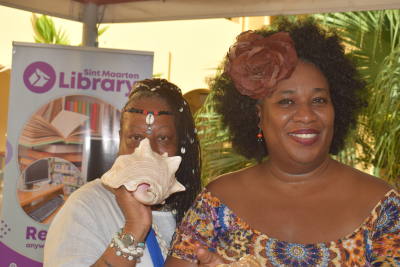
We brought history to life beyond words and experienced it through music, movement, and powerful cultural traditions. The ceremonial blowing of the conch shell marked a moving tribute to our ancestors through the powerful performance of Nkosazana Esther Illis, while A Tribute to the Ancestors, beautifully performed by Shiloh Bedminister, expressed through rhythm and dance the strength, resilience, and enduring legacy of those who walked before us. Together, these captivating performances reminded everyone present that the heartbeat of our ancestors continues to live within us.
This celebration was about more than remembering history. It was about honoring our culture, embracing our identity, and celebrating the enduring spirit of freedom that defines the people of Sint Maarten. Throughout the afternoon, the audience warmly welcomed the performers, organizers, volunteers, and cultural participants whose passion and dedication transformed the occasion into a memorable tribute to our shared past and a celebration of our collective future.
The Sint Maarten Library remains committed to preserving our history, promoting literacy, and creating meaningful opportunities for our community to learn, reflect, and celebrate together. Through events such as this, the Library continues to ensure that the legacy of emancipation, the voices of our ancestors, and the rich cultural heritage of Sint Maarten are remembered, honored, and passed on to future generations.


Subcategories