




 PHILIPSBURG:--- Following her participation in the 35th Session of the United Nations Commission on Crime Prevention and Criminal Justice (CCPCJ) in Vienna, Minister of Justice Nathalie Tackling concluded a series of working visits and strategic engagements in the Netherlands from June 8 to 12.
The visit formed part of the Ministry's broader effort to translate discussions and insights gained during CCPCJ into practical engagements with Kingdom partners and institutions, while exploring approaches relevant to Sint Maarten's ongoing justice reform agenda.
Throughout the visit, the Minister met with Dutch Minister of Justice and Security David van Weel, Director-General for Kingdom Relations Barbara Wolfensberger, Minister Plenipotentiary Gracita Arrindell, State Secretary Claudia van Bruggen, Attorney General Guus Schram, Deputy Director-General of Dutch Customs Mechteld Fletcher, Deputy Director-General Maaike van Tuyll, Deputy Director of FIU-Nederland Robbert Springorum, as well as representatives from correctional institutions, immigration services, customs authorities, and other justice sector partners.
The focus was placed on a number of priority areas for Sint Maarten, including youth crime prevention, firearms trafficking, border management, financial investigations, detention reform, and institutional capacity building.
Particular attention was given to efforts aimed at reducing youth involvement in crime and the illegal flow of firearms. This included initiatives being advanced under the “Preventie met Gezag” approach, aimed at supporting at-risk young males, as well as efforts to strengthen cooperation in tackling organized crime, criminal financial flows, and other forms of cross-border criminal activity.
Border security and Customs modernization were another major focus of the visit. Meetings with Dutch Customs addressed the ongoing Customs Recovery Plan, professionalization of the service, structured training opportunities, and reducing long-term reliance on external support. Progress was also discussed regarding the implementation of the ASYCUDA customs management system. The meetings also examined cooperation under the VGT framework, collaboration with French counterparts, and the use of technology to support border monitoring and enforcement.
The Minister also met with representatives of FIU-Nederland to discuss financial intelligence, anti-money laundering efforts, and Sint Maarten’s preparation for future international evaluations. Discussions highlighted opportunities for technical training, system development, capacity building, and stronger national coordination.
Several meetings addressed detention reform, staffing needs, mental health services, and rehabilitation programmes. Updates were provided on the Detention Sector Reform Program (DSRP), including construction progress, rehabilitation initiatives, and ongoing recruitment efforts.
As part of the visit, Minister Tackling visited the Justitieel Complex Schiphol and PI Nieuwegein Correctional Facility. The visits provided insight into detention management, immigration detention procedures, rehabilitation programmes, reintegration planning, and vocational training opportunities for detainees. At PI Nieuwegein, the Minister also met directly with Sint Maarten nationals currently serving sentences in the Netherlands. The conversations provided insight into the challenges of detention abroad, reintegration, maintaining family connections, and preparing for life after release. The Minister reaffirmed that Sint Maarten nationals serving sentences overseas have not been forgotten.
The visit further reinforced ongoing support and cooperation between the Netherlands and Sint Maarten in addressing shared challenges across the Kingdom.
Reflecting on the visit, Minister Tackling stated:
“Whether we are discussing youth crime prevention, border security, financial investigations, or rehabilitation, these are challenges that require strong institutions and strong partnerships. This visit provided an opportunity to assess progress, strengthen cooperation, and identify practical areas where we can continue building capacity and improving outcomes for Sint Maarten. I am encouraged by the continued engagement of our Kingdom partners and their willingness to support justice reform efforts across the justice chain.”
The Ministry of Justice will continue working with local, Kingdom, and international partners to advance reforms in crime prevention, border security, rehabilitation, detention management, and institutional capacity building.
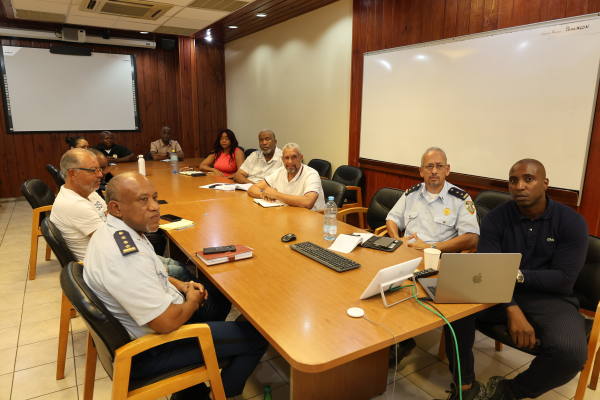 PHILIPSBURG:--- The Police Force of Sint Maarten (KPSM) hosted a high-level coordination meeting on Thursday, June 18, 2026, at the Philipsburg Police Station, bringing together representatives from KPSM, Immigration and Border Protection Services, Customs, and other personnel within the Ministry of Justice.
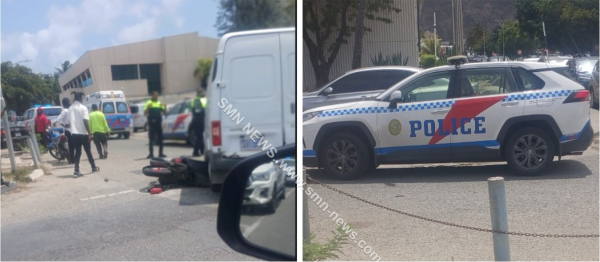 PHILIPSBURG:--- Just one day after a scooter rider was critically injured in an accident near Flow and the Old Post Office parking lot, another serious scooter crash occurred Thursday on Pondfill Road in the vicinity of the Central Bank and the Flow alley, sending yet another rider to the hospital and forcing police to temporarily close one of the island's busiest roads.
 PHILIPSBURG:--- Each year, teachers and non-teaching staff of public and subsidized schools count on receiving their vacation allowance. For many families, this payment helps cover planned expenses, family obligations, and much-needed time to rest and recharge after a demanding school year. It is not a bonus, a favor, or an unexpected benefit. It is a legal entitlement.