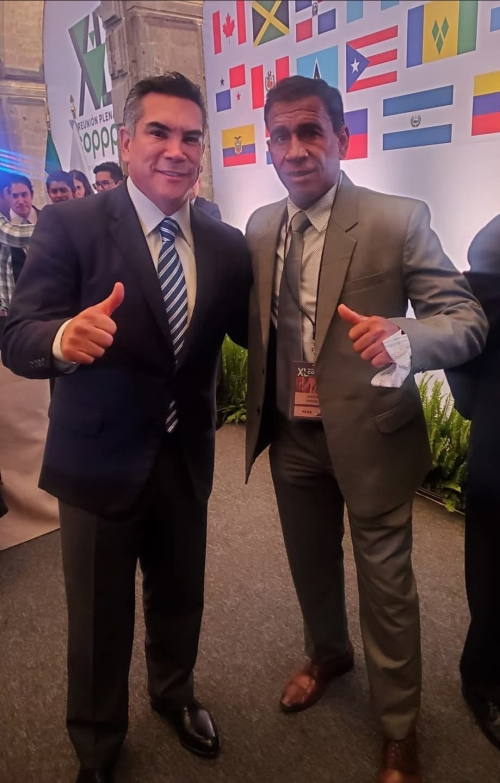
 PHILIPSBURG:--- The Plenary of the Permanent Conference of Political Parties of Latin America and the Caribbean (COPPPAL) unanimously elected James Finies as the new President of the COPPPAL Decolonization Committee.
COPPPAL brings together 80 political parties from 30 countries and is headquartered in Mexico City, the capital of the United Mexican States.
In recognition of Finies international and worldwide advocacy concerning Bonaire and other Caribbean territories administered by the Kingdom of the Netherlands, the 43rd COPPPAL Plenary Meeting appointed James Finies to chair the Decolonization Committee.
The Committee's mandate is to promote dialogue and international attention on decolonization issues relating to Aruba, Curaçao, Sint Maarten, Bonaire, Sint Eustatius (Statia), and Saba, as well as matters concerning Puerto Rico and the Malvinas (Falkland Islands).
During its plenary session at the former Senate building of Mexico, COPPPAL reaffirmed its longstanding position opposing colonialism in all its forms.
The organization encouraged continued discussion of these issues within the United Nations and other international forums and expressed its support for ongoing international engagement regarding Bonaire and other non-self-governing territorial matters.
COPPPAL also reiterated its solidarity with Puerto Rico and reaffirmed Argentina's position regarding the Malvinas (Falkland Islands).
As part of the plenary program, James Finies addressed delegates from Latin America, the Caribbean, Africa, Europe, and Asia on contemporary decolonization issues.
In his presentation, he highlighted concerns regarding the protection of Bonaire's cultural identity, the implementation of international legal standards, and the importance of ensuring that matters relating to the island continue to receive appropriate international attention through established multilateral mechanisms.
James Finies also drew special attention to what he described as the increasing marginalization of the people of Bonaire through institutionally steered laws and policies resulting into significant demographic changes over recent years.
Finies noted concerns that the proportion of the island's natives and long-established local population has steadily systematically declined as a minority percentage of the total population, raising important questions about the ongoing erasure of Bonaire's cultural heritage, identity, language, and meaningful participation in public affairs.
James Finies emphasized that these developments warrant continued dialogue and consideration within the framework of applicable international standards and the United Nations decolonization process.