




~Says Sint Maarten has talked long enough while neighbors have benefited for decades~
 PHILIPSBURG:--- More than two years after making prepaid electricity one of the central pillars of his 2024 parliamentary election campaign, former parliamentary candidate Julian Rollocks Jr. is renewing his call for the Government and NV GEBE to stop talking and finally implement what he describes as a proven solution that would benefit every household and business in Sint Maarten.
Rollocks' renewed appeal comes in response to recent statements by GEBE official Patrick Drijvers confirming that the utility company is working to introduce a prepaid electricity system.
While welcoming the update, Rollocks questioned why Sint Maarten continues to lag behind other Caribbean islands that have successfully operated prepaid electricity systems for decades.
"I commend Mr. Drijvers for being transparent with the public," Rollocks said. "But if we are still not ready today, then when will we be?"
Rollocks reminded the public that prepaid electricity was one of the issues he consistently advocated during the January 2024 parliamentary election campaign, arguing that it would provide immediate financial relief and greater control over electricity expenses for consumers.
According to Rollocks, the neighboring island of Curaçao introduced prepaid electricity as early as 2002, proving that the technology is neither experimental nor complicated.
During his campaign, Rollocks said he personally discussed the system with the director of one of Curaçao's largest electricity companies, who explained that implementing prepaid electricity had been relatively straightforward.
"That raises a serious question," Rollocks noted. "Why does every technological improvement somehow become so complicated in Sint Maarten?"
Promises Stretch Back Years
Rollocks revealed that discussions about prepaid electricity did not begin during the election campaign.
He said nearly three years ago, he also spoke extensively with the late former GEBE Temporary Manager Troy Washington, who at the time assured him the utility company was already working toward introducing prepaid electricity.
"Three years later," Rollocks observed, "the public is still hearing the same message—that GEBE is working on it."
He also expressed disappointment that the political party on whose ticket he contested the 2024 parliamentary elections is now part of the governing coalition, yet has not aggressively pursued the proposal despite what he described as overwhelming public support.
Meanwhile, Rollocks noted, several neighboring islands are already expanding beyond prepaid electricity by introducing prepaid water services.
Putting Consumers in Control
Rollocks argues that prepaid electricity functions much like prepaid mobile phone service.
Consumers purchase a specific amount of electricity before using it, allowing them to monitor and manage consumption without worrying about receiving unexpectedly high bills at the end of the month.
"If someone buys only 30 kilowatt-hours," he explained, "they know they must carefully manage how they use electricity. They may decide to use a fan instead of the air conditioner or simply reduce unnecessary consumption."
He believes this approach gives consumers complete control over their monthly spending while encouraging more responsible energy use.
Benefits for Consumers and GEBE
According to Rollocks, prepaid electricity would deliver multiple advantages across the country.
Among the key benefits he identified are:
- Easier household budgeting and improved cash-flow management.
- A simple "pay-as-you-go" system similar to prepaid mobile phones.
- Greater awareness of electricity consumption encourages energy conservation.
- Elimination of disputes between landlords and tenants over unpaid utility bills, while reducing the administrative burden of changing accounts between occupants.
- No unexpected high monthly electricity bills.
- Real-time monitoring of electricity usage through mobile applications, allowing consumers to track consumption before their credit runs out.
Rollocks also believes the system would significantly improve GEBE's financial position by reducing outstanding receivables and improving the utility company's cash flow through advance payments.
Cost of Living Demands Urgent Action
With many families continuing to struggle under the rising cost of living, Rollocks said Government and GEBE should treat prepaid electricity as an urgent priority rather than another long-term project.
"Our people are struggling," he said. "Any measure that allows families to better control their monthly expenses deserves immediate attention."
He stressed that prepaid electricity is no longer an innovative experiment but a well-tested utility model that has been successfully operating throughout the Caribbean for more than two decades.
Rollocks concluded by thanking GEBE for updating the public on its progress but maintained that the time for discussions has passed.
"The people of Sint Maarten deserve action," he said. "Prepaid electricity is a proven system. The question is no longer whether it works. The question is how much longer the people must wait before it finally becomes reality."
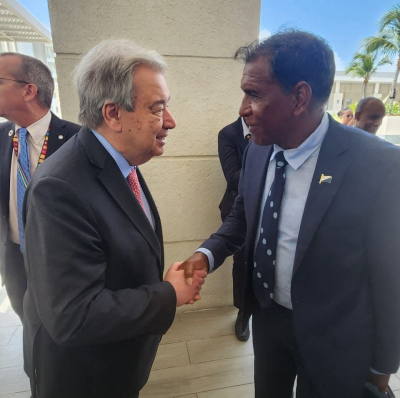 BONAIRE:--- The Bonaire Human Rights Organization (BHRO) and James Finies distance themselves from the conference held in Washington, D.C., titled "Right of Return and Self-Determination: Double Standards and Selective Approaches," organized by the Baku Initiative Group (BIG), an organization from Azerbaijan.
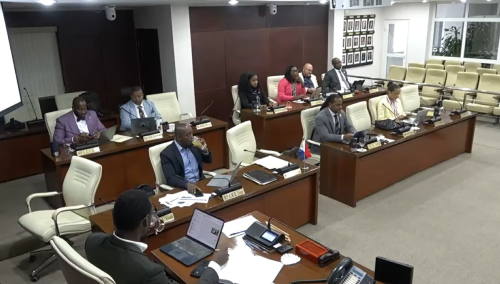 PHILIPSBURG:--- If there was one message that emerged from Friday's Central Committee budget debate, it was that Members of Parliament are no longer satisfied with approving millions in public spending without measurable results.
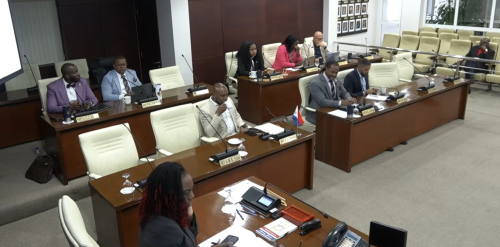 PHILIPSBURG:--- What began as Finance Minister Marinka Gumbs' presentation of a Cg. 647 million national budget quickly turned into a marathon of scrutiny as Members of Parliament fired hundreds of questions at the Council of Ministers, demanding concrete timelines, measurable results, and accountability for virtually every ministry.
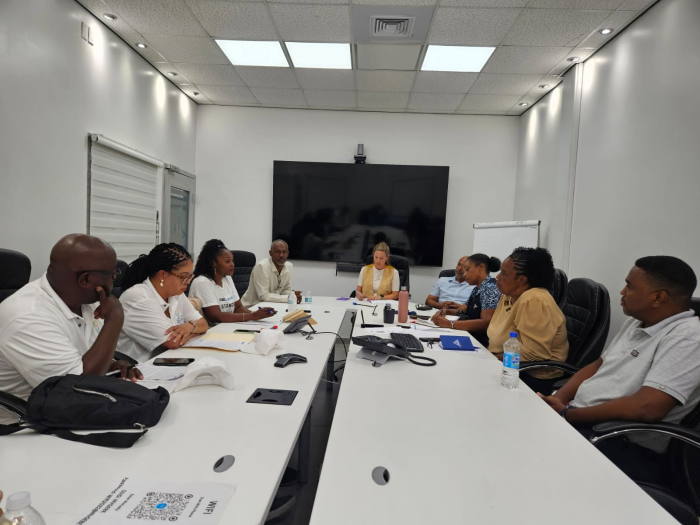 PHILIPSBURG:--- After a fruitful meeting with representatives of ACP-SXM on Friday, June 26, 2026, NV GEBE has decided to pause the disconnection of non-paying consumers, scheduled for this Monday, June 29, 2026.