Vinaora Nivo Slider 3.xVinaora Nivo Slider 3.x

IRION urges parliament to set firm budget timeline.

~Says civil servants deserve certainty instead of waiting for the government's schedule~

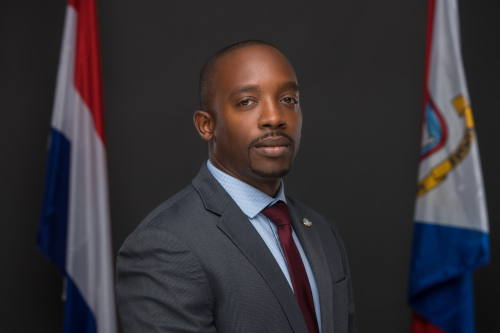
ardwellirion29042025PHILIPSBURG:--- Member of Parliament Ardwell Irion has called on Parliament to establish firm dates for the continuation of the 2026 budget debate, saying civil servants should not be left in limbo because of uncertainty surrounding the parliamentary schedule.

In Monday's notifications, Irion said several civil servants had expressed concern after comments suggesting Parliament could reconvene in the third or fourth week of July without a definite timetable.

According to the MP, the uncertainty has created frustration among public servants attempting to plan vacations and family trips during the summer.

Irion argued that Parliament—not the Executive Branch—must determine its own schedule.

"We don't work for government. Government is accountable to us," Irion reminded the Chair.

He criticized what he described as inefficiencies in the planning of this year's budget process, saying Parliament should establish clear deadlines rather than waiting indefinitely for the government to indicate when it is ready to continue.

"The presidium, the whole organizing of this budget, the inefficiency, the not giving dates... I believe we should be able to tell civil servants, 'On this date we will come back,'" Irion stated.

The MP noted that during normal budget debates there is generally an established schedule, allowing both Members of Parliament and civil servants to plan accordingly.

He urged that before Monday's meeting concludes, Parliament should adopt a definitive roadmap for the remaining stages of the budget process.

"I hope that at the end of today we can really establish the way forward," Irion concluded.

Beyond the procedural issue, Irion's remarks touched on the broader relationship between Parliament and the Executive, stressing that legislative oversight should not be dictated by the government's availability, but by Parliament's constitutional responsibility to hold the Executive accountable.


Irion questions legality of Ministries collecting Government Revenue.

~MP demands explanation after civil servants raise concerns over Finance responsibilities~

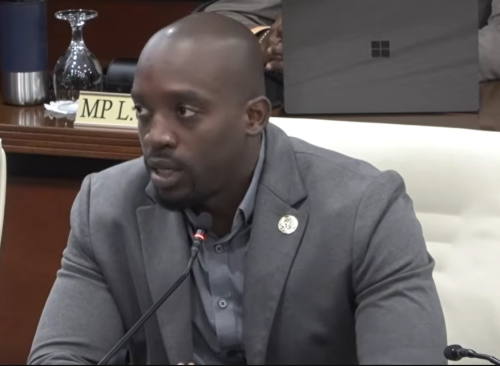
ardwelliron29062026PHILIPSBURG:---  Member of Parliament Ardwell Irion has publicly questioned whether two government ministries may have been exercising powers that legally belong to the Receiver's Office, raising concerns over the management of government revenue collection.

Speaking during the notifications segment of Monday's Central Committee meeting, Irion said civil servants had approached him with concerns that the Ministries of TEATT and VROMI had, for several months, been performing revenue collection functions normally assigned to the Receiver's Office within the Ministry of Finance.

Addressing Finance Minister Marinka Gumbs directly, Irion called for a clear explanation of the legal authority behind the arrangement.

"I want to understand what the legal basis was for that," Irion stated, emphasizing that government should never execute administrative decisions without ensuring they are supported by law.

The MP questioned who authorized the transfer of responsibilities and whether legislation or regulations permitted such a move.

"I don't want us in government to be doing things, and then when we look, we do it and execute, that there was actually no legal basis for that to happen," he warned.

Irion further questioned why, after reportedly experiencing operational problems, responsibility now appears to be shifting back to the Ministry of Finance.

"So who made this decision? Why? And show me where there's a legal basis for that," he said.

His remarks place renewed focus on internal government procedures and accountability, particularly at a time when Parliament is scrutinizing the country's financial management during the ongoing 2026 budget discussions.

Should the concerns prove justified, Parliament may seek additional clarification from the Minister of Finance regarding whether statutory responsibilities were reassigned without the necessary legal framework.

The issue now adds another layer to the budget debate, where lawmakers continue to examine government governance, transparency, and compliance with existing financial legislation.

When the watchdogs are watched: The quiet crisis threatening St. Maarten's Democracy.

smnfreepress29062026PHILIPSBURG:---  A free and independent press is one of the cornerstones of any democratic society. It exists to question those in power, expose wrongdoing, and provide citizens with accurate, balanced, and independent information. But what happens when the lines between journalism, politics, and the justice system become blurred?

Across St. Maarten, concerns continue to surface about the growing perception that parts of the media landscape have become entangled with political interests, government officials, and individuals within the justice chain. While such concerns are often discussed quietly behind closed doors, they raise broader questions about conflicts of interest, editorial independence, and public confidence in both the media and public institutions.

The issue extends beyond politics alone. When journalists, government officials, prosecutors, politicians, or other public servants develop relationships that create either actual conflicts of interest or the appearance of undue influence, public trust can quickly erode. Even where no laws are broken, the perception that information is being managed rather than independently reported can damage confidence in democratic institutions.

Editorial Independence Under Pressure

Journalists are expected to operate independently from the institutions they cover. Editors should determine what is published based on news value, verification of facts, and the public interest—not because of pressure from political figures, government offices, or other influential actors.

When editorial decisions appear to be influenced by outside interests, several questions naturally arise:

  • Are stories being published because they are newsworthy?
  • Are important stories being delayed or ignored?
  • Are some public officials receiving favorable treatment?
  • Are others facing disproportionate scrutiny?

Even the perception that these questions need to be asked is damaging.

The Danger of Confidential Information

Another issue frequently discussed within public circles is the unauthorized disclosure of confidential information.

Government files, investigative documents, legal correspondence, cabinet papers, and internal memoranda often contain sensitive information protected by law or by the integrity of ongoing investigations. If such material reaches the public through unauthorized leaks, several concerns arise.

First, there is the question of how the information was obtained.

Second, whether releasing it serves the public interest or instead undermines due process, privacy rights, or ongoing investigations.

Third, whether leaks are occurring selectively to benefit particular individuals or political agendas.

Whistleblowing that exposes genuine wrongdoing can play an important role in a democracy. However, selective or politically motivated leaking is a different matter and can distort public understanding rather than strengthen accountability.

When Questions Become Enemy

An equally troubling development occurs when journalists fulfill their most fundamental responsibility: asking difficult questions. In every democracy, those entrusted with public office should expect to be questioned about their decisions, the use of public funds, and the exercise of their authority. Yet there are times when legitimate scrutiny is met not with answers, but with hostility. Reporters who persist in asking uncomfortable questions may find themselves publicly attacked, denied access to information, excluded from official briefings, or portrayed as adversaries rather than professionals carrying out their duty. Such reactions can create a chilling effect, discourage robust reporting and weaken the public's right to know. A government that welcomes accountability strengthens democracy; one that treats critical questioning as a threat risk undermining the very transparency and openness upon which public trust depends.

Public Officials and the Media

Government officials routinely communicate with journalists. Press conferences, interviews, official statements, and requests for comment are all part of normal democratic governance.

The concern arises if public officials move beyond providing information and begin directing editorial decisions or attempting to influence what is or is not published. Any such conduct, if it occurs, would be inconsistent with the principle of an independent press.

Editorial judgment belongs to editors and publishers—not public officials.

Justice must also be seen to be Independent

The justice system relies heavily on public confidence.

Investigators, prosecutors, defense attorneys, judges, and journalists all have distinct roles that should remain separate. Where those roles appear to overlap in ways that create conflicts of interest, public confidence can suffer, even if no misconduct is ultimately established.

The administration of justice depends not only on impartiality, but also on the appearance of impartiality.

A Small Island's Unique Challenges

St. Maarten's size presents challenges that are familiar to many small jurisdictions. Journalists, politicians, lawyers, police officers, prosecutors, judges, and business leaders often know one another personally. Those realities make strong professional boundaries even more important.

International standards on media ethics emphasize transparency, editorial independence, and the avoidance of conflicts of interest. Likewise, public officials are expected to avoid situations that could reasonably call their impartiality into question.

Maintaining those standards helps protect both institutions and the public's confidence in them.

Trust is earned through transparency

A healthy democracy does not require journalists and public officials to be adversaries. It requires each institution to respect the other's independence.

The public deserves confidence that news reporting is driven by verified facts rather than political influence, that editorial decisions are made independently, and that public institutions conduct their work free from improper interference.

These principles are not unique to St. Maarten. They are foundational to democratic governance everywhere.

As public debate continues about accountability, transparency, and integrity, one truth remains clear: democracy depends not only on free elections, but also on citizens having access to independent journalism and public institutions that operate—and are seen to operate—with integrity.

Only by safeguarding those principles can public trust be strengthened and preserved.

St. Maarten AI Leader Ife Badejo Selected by U.S. Mission for AI for Good Global Summit.

~One of only three International Visitor Leadership Program (IVLP) alumni worldwide selected by the U.S. Mission—and the only Caribbean participant contributing to programming at the U.S. Pavilion.~

ifebadjeo29062026PHILIPSBURG:---  Ife Badejo, Founder and CEO of Islandpreneur International and government-appointed AI Ambassador of Sint Maarten, has been selected by the U.S. Mission to the United Nations in Geneva to participate in the AI for Good Global Summit, taking place July 7–10, 2026. She is one of only three International Visitor Leadership Program (IVLP) alumni worldwide selected for this distinction and the only participant from the Caribbean contributing to programming at the U.S. Pavilion during the summit.
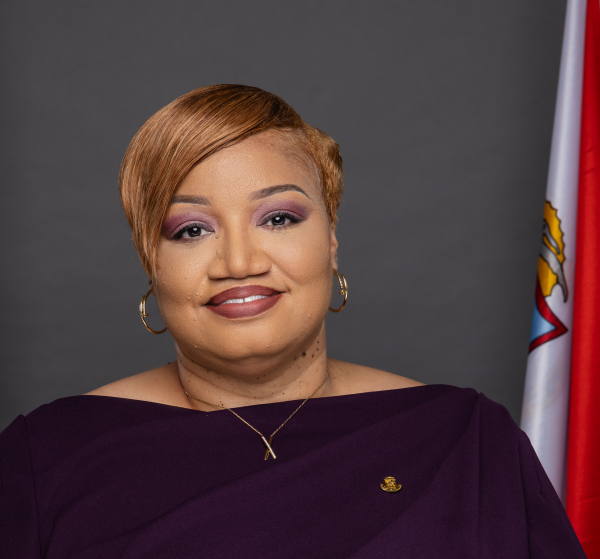
The invitation recognizes Badejo's leadership in advancing artificial intelligence education, entrepreneurship, and digital transformation across the Caribbean. In its official invitation, the U.S. Mission noted that her 'expertise and perspective represent the very best of what U.S. technology, innovation, and leadership have to offer,' recognizing the impact of her work across the region.

The AI for Good Global Summit, organized by the International Telecommunication Union (ITU) in partnership with more than 50 United Nations agencies and co-convened with the Government of Switzerland, is the world's leading United Nations platform on artificial intelligence. The summit brings together heads of state, policymakers, researchers, business leaders and innovators from more than 169 countries to explore how AI can be developed responsibly for the benefit of humanity.

Beyond the main summit programme, Badejo will participate in specialized programming at the U.S. Pavilion and high-level engagements organized by the U.S. Mission, creating opportunities to engage with government officials, business leaders and global experts working at the forefront of AI policy, innovation and emerging technologies.

For the Caribbean, this invitation carries significance beyond one individual's participation. Small island developing states have historically had limited representation in many of the international conversations that shape AI governance, digital infrastructure, and innovation policy. As AI reshapes economies at pace, ensuring Caribbean perspectives are included in these conversations has never been more important.

Too often, small island states are absent from the rooms where the future of technology is being shaped. This invitation is an opportunity not only for Sint Maarten, but for the wider Caribbean, to contribute meaningfully to global conversations about artificial intelligence, innovation and shared economic growth.”— Ife Badejo, AI Ambassador, Sint Maarten

The 2026 summit is held under the theme 'AI and Frontier Technologies for Good' and includes discussions on AI governance, digital infrastructure, robotics, frontier technologies and the role of AI in achieving the United Nations Sustainable Development Goals. Alongside the summit, Badejo will also participate in meetings at the intersection of AI, the creative industries and intellectual property.

Badejo has spent more than a decade building entrepreneurship capacity across the Caribbean, training more than 2,000 professionals through programmes delivered across more than 15 Caribbean territories. During the past year alone, she has trained more than 400 professionals in artificial intelligence through workshops and executive programmes delivered to governments, regulators, financial institutions and entrepreneurs. Her work through Islandpreneur International is grounded in the belief that AI education is no longer a luxury—it is essential infrastructure for economies that intend to compete.

Her participation in Geneva reflects a broader mission: ensuring Caribbean nations are not simply adopters of emerging technologies, but active contributors helping shape the future of artificial intelligence.

For more information and regular updates, stay connected through social media or email This email address is being protected from spambots. You need JavaScript enabled to view it.  

Council of Ministers Unanimously Approves Milestone 2027 Draft National Budget.

marinka17072025PHILIPSBURG:--- The Government of Sint Maarten has reached a historic milestone following the unanimous approval of the 2027 Draft National Budget by the Council of Ministers on Thursday, June 25, 2026.



The Minister of Finance announced that the 2027 National Budget is expected to complete the constitutional process within the legally prescribed timeframe. While several important steps remain before ratification, this approval by the Council of Ministers places Sint Maarten in a position to have an approved national budget before the end of the year for the first time in the country's history.

This milestone is the result of months of preparation, unprecedented collaboration across Government, and a deliberate decision to learn from the past and fundamentally change the way the national budget is prepared.

In presenting the 2026 National Budget to Parliament, Minister of Finance Marinka Gumbs made clear that the longstanding pattern of delayed budgets could not continue. Rather than treating these delays as isolated events, the Ministry chose to examine the underlying causes that had contributed to repeated delays over many years. The conclusion was clear: delivering budgets on time would require more than working harder. It would require working differently.

The 2027 budget cycle marked a fundamental shift in Government's approach to budgeting. Rather than beginning with numbers alone, the process began with strategy. In February, the Ministry of Finance launched the 2027 budget cycle with its first-ever Strategic Budget Session, bringing together Ministers, Secretaries-General, Financial Controllers, Chiefs of Staff, the Policy-Based Budgeting team, and the Financial Policy Department (FBBB). Representatives of the CFT also attended the session as observers.

This collaborative approach continued over the following months through regular working sessions and targeted support for ministries requiring additional assistance. By engaging ministries earlier and working closely with them throughout the process, Government was able to align policy priorities with available resources, identify challenges sooner, and improve both the quality and timeliness of budget preparation. Those conversations laid the foundation for a budget process built on planning rather than urgency.

Government also continued implementing Policy-Based Budgeting, strengthening the connection between public spending and the policy outcomes it seeks to achieve. Rather than viewing the budget as a collection of expenditures, ministries were challenged to clearly define what they intended to accomplish, how those priorities supported Government's broader objectives, and how public resources would contribute to measurable results.

Throughout the budget cycle, the Policy-Based Budgeting team within the Ministry of Finance worked closely with every ministry, providing guidance and technical support that improved the quality, consistency, and coherence of budget submissions while helping ministries stay on schedule.

The Minister of Finance underscored that this achievement is shared. "This is not a success that belongs to the Ministry of Finance alone. It belongs to this Government. It belongs to every ministry that committed itself to the process, every civil servant who contributed to the preparation of the policy books, every Financial Controller who worked tirelessly behind the scenes, every Secretary-General who provided leadership within their ministry, and every colleague Minister who took ownership of their ministry's priorities."

Minister Marinka Gumbs thanked her fellow members of the Council of Ministers for embracing a more disciplined approach to the budget process. Their early engagement, difficult policy choices, and active involvement made this a truly Government-wide effort.

The Minister of Finance reserved special recognition for the Secretary-General of Finance, Ms. Roxanne Howell, the Financial Policy Department and the Policy-Based Budgeting team, internally led by Christian Grannum with project management support by Grant Thornton, Jan Ludolf Herees and Robert van Zeeland, for the leadership they provided throughout the reform process.

Often working outside public view, these professionals provided the steady coordination, sound judgment, and collaborative approach required to transform an ambitious reform into a tangible result.

The Minister added that this milestone also establishes a new expectation for Government: "We have shown that institutional reform is possible. We have demonstrated that with planning, discipline, and collective ownership, Sint Maarten can deliver its national budget on time. We have raised the standard. Our responsibility is no longer to prove that it can be done, but to continue improving the quality of our budget submissions while refining our timelines year after year."

While important constitutional steps remain before the budget reaches Parliament, this milestone offers confidence that the country is entering a new chapter in public financial management. The work continues, but the foundation has been laid.

Reflecting on the achievement, Minister Gumbs concluded:

"This achievement is significant, but it is not the destination. It is evidence that we are moving in the right direction. This Government remains committed to continuously improving both the quality of the budget and the discipline of the process that produces it. The people of Sint Maarten deserve nothing less."

The Draft National Budget 2027 has now been submitted to the CFT for its advice. In addition, the Minister of Finance has submitted an Improvement Plan for the 2027 budget process, reflecting her commitment to the timely completion of the 2027 National Budget. The remaining stages of the budget process include review by the Council of Advice before the draft budget is submitted to Parliament.


Subcategories

Vinaora Nivo Slider 3.x

RADIO FROM VOICEOFTHECARIBBEAN.NET

Vinaora Nivo Slider 3.xVinaora Nivo Slider 3.x
Vinaora Nivo Slider 3.x