




Vinaora Nivo Slider 3.xVinaora Nivo Slider 3.x

Impasse at the WTO on investment facilitation—the way forward.

Guest Post by Karl P. Sauvant and Rajesh Aggarwal · At the March 2026 Ministerial Conference of the World Trade Organization (WTO), India blocked the adoption of the Investment Facilitation for Development Agreement (IFDA), a plurilateral initiative backed by 131 members, including 94 developing countries. India stood alone after South Africa and Türkiye withdrew their objections. The IFDA is, by design, modest in scope. It does not address market access (including for firms from specific countries), investment protection, or investor–state dispute settlement; nor does it restrict the ability of governments to formulate their own investment policies. Instead, it focuses on improving transparency, streamlining administrative procedures, and fostering cooperation between governments and investors. These are not abstract ideals; they are practical reforms that many countries—including India—have already pursued domestically. India’s own policy trajectory mirrors the Agreement’s core objectives. If India has already validated these reforms at home, why resist their codification at the global level? The answer lies less in substance and more in principle. India’s opposition reflects a deeper concern about the rise of plurilateral agreements within the WTO framework. The WTO has been anchored in consensus-based decision-making. Plurilateral agreements, negotiated among subsets of members, risk diluting this principle by creating parallel rule-making tracks that exclude dissenting countries. From a systemic standpoint, plurilateralism could fragment the WTO.

Yet there is a difference between resisting a trend and isolating oneself from it. India’s solitary opposition to the IFDA carries reputational and strategic costs. When a major economy stands apart from a proposal supported by a broad coalition of developing and developed economies, it can appear hesitant about transparency or broader rule-making efforts. This perception sits uneasily with India’s parallel ambition to position itself as a leading destination for global investment. Over the past decade, India has invested significant political and economic capital in improving its business and investment climate. But global investors assess not only domestic policies; they also read signals from international engagement. A veto at the WTO risks undermining the credibility of reforms undertaken at home. More importantly, when a critical mass of WTO members moves ahead with plurilateral agreements, the resulting standards often become de facto global benchmarks. In this case, the 131 participants in the IFDA accounted for over 75% of world imports (2025) and over 70% of world inward FDI flows (2024). This dynamic is already visible in areas such as digital trade, where subsets of countries have advanced negotiations despite the absence of full consensus. Over time, these rules shape global value chains, regulatory expectations, and investment flows. Countries that remain outside such frameworks do not escape their influence.

How, then, to move forward?

A first option is for India to lift its veto on the IFDA’s integration into the WTO rulebook as a plurilateral agreement while safeguarding its systemic concerns. During the Ministerial, Minister Piyush Goyal indicated how this could be done, namely by establishing clear guardrails and legal safeguards. These could be enshrined in a Declaration accompanying the adoption of the IFDA, approved by consensus among all WTO members.

Such a Declaration could:

Reaffirm the core safeguard embedded in the WTO’s founding Marrakesh Agreement: that decisions must be taken by consensus. · Clarify that the IFDA is a standalone agreement, and its adoption does not establish a precedent for other plurilateral initiatives. · Confirm that any investment-related issue going beyond investment facilitation as contained in the IFDA—such as market access, investment protection, investor-state dispute—is separate and distinct from the IFDA. · Underline that nothing in the IFDA affects the rights and obligations of non-participants. · Reiterate that the IFDA is open to all WTO members to join in the future. · Require that the implementation of IFDA measures needs to be done in a non-discriminatory manner regarding foreign investors from all WTO members. The second option is straightforward: India joins the IFDA, thus allowing the Agreement to be adopted by consensus. This would align India’s international stance with its domestic reform agenda and send a clear signal of commitment to transparency and predictability. Given that the Agreement does not constrain policy space on sensitive issues such as market access or investment protection, the costs of participation are limited, while the reputational gains could be significant. A Declaration, as outlined above, could facilitate this option, although joining the Agreement would, in any event, give India a direct role in its further development. Whatever option is chosen, India can uphold multilateralism without resorting to obstruction by engaging constructively in shaping emerging trade rules. With the WTO at a turning point, India faces a choice not between multilateralism and plurilateralism, but between influencing the future of global trade or being shaped by decisions made without it.· Karl PSauvant is Senior Fellow, CCSI, Columbia University, and former Director of UNCTAD’s Investment Division; Rajesh Aggarwal is Visiting Professor, ICRIER, New Delhi.


PUBLIC NOTICE: Middle Region & Defiance Community Street Sale.

Date: Sunday, June 14, 2026
Road Closure: 12:00 PM
Event Start Time: 3:00 PM


cakesale10062026Vehicular traffic will not be permitted to access the Middle Region district via the intersection of Sucker Garden Road, Hulda B. Richardson Road, and Middle Region Road.

Motorists traveling to the Middle Region are advised to use the following alternative route:
• Hulda B. Richardson Road
• Bimini Road
• Ellis Drive
• Middle Region Road
In addition, vehicular traffic traveling from Middle Region toward Defiance will not be possible as the road will be closed at the intersection of Middle Region Road and Ellis Drive.
Residents and motorists within the Middle Region district wishing to exit the area must travel eastbound via:
• Ellis Drive
• Bimini Road
• Hulda B. Richardson Road
Motorists are requested to follow all instructions given by police officers and event marshals stationed along the route.
Public Safety Reminder
KPSM asks all road users to exercise patience and caution during these events. Motorists are encouraged to plan their journeys accordingly, expect minor delays, and utilize alternative routes where possible.
The cooperation of the public is essential in ensuring the safety of all participants, spectators, and road users throughout the weekend. KPSM also reminds parents to be aware of the whereabouts of their children and encourages everyone attending these events to remain vigilant and report any suspicious activity to the police.
The Police Force of takes this opportunity to thank the Sint-Maarten community for its understanding and cooperation.

PUBLIC NOTICE: TRAFFIC ADVISORY FOR WEEKEND EVENTS.

sxmflagday10062026PHILIPSBURG:--- The Police Force of Sint Maarten (KPSM) hereby informs the general public of two permitted events scheduled for this weekend that will affect the normal flow of traffic and require additional safety measures. These events have received the necessary permits and approval from the Honorable Minister of Justice.
KPSM urges all motorists, residents, and visitors to take note of the following traffic diversions and road closures:

SXM Flag Day Celebration

Date: Saturday, June 13, 2026
Mini Parade Start Time: 3:00 PM

The SXM Flag Day Mini Parade will follow the route below:

  • Walter Plantz Square
  • Front Street
  • Emmaplein
    • Back Street
    • Left onto Wilhelmina Straat
    • Ending at Cyrus Wathey Square

    Temporary traffic interruptions are expected along the parade route as participants proceed through Philipsburg. Motorists are advised to use alternative routes where possible and to follow all instructions given by police officers on duty.

Five Years of Failure at NV GEBE.

~How Shareholder Representatives and Political Interference Have Kept Sint Maarten's Most Important Company in Permanent Crisis~

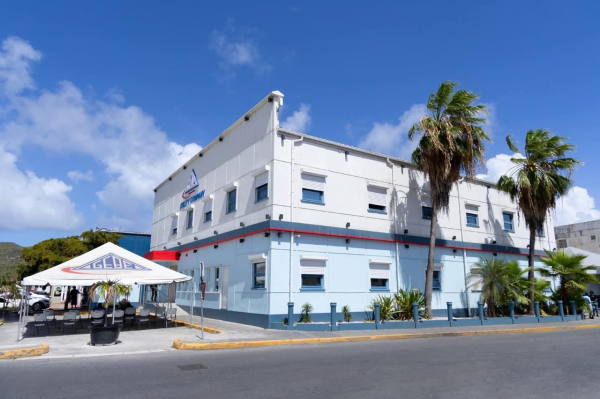
nvgebe10062026PHILIPSBURG:---  No private company could survive what NV GEBE has endured over the past five years.
No serious utility provider responsible for supplying electricity and water to an entire country should be subjected to the level of uncertainty, instability, and political interference that has become the norm at Sint Maarten's sole utility company.

Yet this is exactly what has happened.

While governments have come and gone, while Ministers and Prime Ministers have changed, while Supervisory Boards have been replaced, one thing has remained constant: the failure of the shareholder representatives to ensure stable and competent leadership at NV GEBE.

Today, the country once again faces uncertainty about the future management of its only utility company.

The question is no longer whether there is a governance crisis at NV GEBE.

The question is who should be held accountable for creating it.

The last stable Management Board

In 2015, the Government appointed a statutory management board consisting of Chief Executive Officer Kenrick Chittick, Chief Financial Officer Iris Arrindell, and Chief Operations Officer Veronica Webster -Jensen.

The three directors served their full statutory term.

Regardless of how one evaluates their performance, they provided one thing that has been absent ever since: stability.

Their five-year term ended in November 2020.

That was nearly six years ago.

Since then, NV GEBE has become trapped in an endless cycle of temporary appointments, management changes, political disputes, and uncertainty.

The fact that Sint Maarten's only utility company has operated for years without a stable permanent management structure should alarm every citizen.

Instead, it has become normalized.

A Revolving Door of Leadership

Following the expiration of the management board's term, the company entered one of the most unstable periods in its history.

Temporary managers became the norm rather than the exception.

Sharine Daniel was appointed as Temporary Manager.

Devon Dembrook was appointed in February 2021

Her tenure was short-lived.

Thereafter, Timmer Jimmy was appointed Temporary Manager and later elevated to Statutory Director.

That appointment also ended abruptly.

The country witnessed yet another management disruption when he was dismissed, creating further uncertainty within the organization.

Then came Troy Washington.

On September 13, 2022, Washington was appointed Temporary Manager of NV GEBE.

Many employees viewed his appointment as an opportunity to restore some measure of stability.

By all accounts, Washington worked tirelessly to steer the company through one of the most difficult periods in its history.

Yet despite serving for years and despite efforts to formalize leadership at the company, he remained in a temporary capacity.

When Washington tragically passed away in March 2025, he was still not a permanently appointed CEO.

Think about that for a moment.

The man entrusted with running the country's only utility company remained in a temporary position years after his appointment.

If that does not represent a governance failure, what does?

Who Failed to Act?

The Supervisory Board of Directors cannot appoint a permanent management board on its own.

The appointment process requires the involvement and approval of shareholder representatives and ultimately the Government.

This is where real failure begins.

For years, recommendations were reportedly submitted.

Candidates were identified.

Processes were undertaken.

Discussions took place.

Yet the appointments never materialized.

The result was predictable.

Instead of establishing long-term leadership, NV GEBE was forced to continue operating under temporary arrangements.

The consequence of that failure has been enormous.

Employees lost confidence.

Strategic projects stalled.

Long-term planning has become increasingly difficult.

Institutional knowledge was disrupted.

The company became vulnerable to political influence.

Most importantly, the public's confidence in the organization continued to erode.

A Political Playground

The unfortunate reality is that many citizens have come to view government-owned companies as extensions of political power.

Every election seems to bring a new political reality.

Every new political reality seems to trigger discussions regarding boards and appointments.

Every new appointment brings speculation regarding political loyalties.

Every change creates uncertainty.

Meanwhile, the country continues to suffer.

Government-owned companies should never become bargaining chips in political negotiations.

Board appointments should never be viewed as rewards.

Executive positions should never be determined by political preferences.

These positions should be filled by the most qualified individuals available.

NV GEBE is not a social club.

It is not a political organization.

It is not a campaign office.

It is the company responsible for powering an entire nation.

Its leadership should be selected based on competence, experience, technical knowledge, and proven management ability.

Nothing else.

The Water Plant that Never Happened

One of the most frustrating examples of the country's failure to think strategically is the continued absence of a national water production facility.

Nearly a decade ago, discussions were taking place regarding the possibility of developing a water plant capable of providing Sint Maarten with greater independence and security.

The vision was simple.

Reduce dependence.

Increase national resilience.

Strengthen critical infrastructure.

Create long-term benefits for future generations.

Yet years later, that vision remains unrealized.

Governments have changed.

Boards have changed.

Managers have changed.

But the country still finds itself discussing many of the same issues that existed ten years ago.

The question citizens should ask is simple:

How many opportunities have been lost because long-term planning was sacrificed for short-term political considerations?

Another Temporary Appointment?

Now, NV GEBE once again finds itself at a crossroads.

Reports indicate that discussions are underway regarding yet another temporary management appointment.

If true, it would represent another chapter in a story that has become all too familiar.

Another temporary solution.

Another transitional period.

Another delay.

Another missed opportunity to provide the company with the stable leadership it desperately needs.

Employees are understandably concerned.

Many have spent years adapting to changing management structures.

Many have witnessed repeated shifts in direction.

Many are simply tired of the uncertainty.

They deserve better.

The Shareholder Representatives Must Be Held Accountable

The time has come to stop blaming everyone else.

The time has come to stop hiding behind procedures.

The time has come to stop pretending that this situation is normal.

It is not normal.

It is not acceptable.

And it is certainly not in national interest.

The shareholder representatives were entrusted with protecting the interests of NV GEBE and by extension the people of Sint Maarten.

That responsibility includes ensuring competent governance, stable leadership, and long-term strategic planning.

Looking at the events of the last five years, it is difficult to argue that those objectives have been achieved.

The facts speak for themselves.

One management board completed its term in November 2020.

Five years later, NV GEBE is still struggling to secure lasting executive leadership.

Five years later, temporary appointments continue.

Five years later, employees remain uncertain about the future.

Five years later, the country's most important company remains trapped in instability.

That is not success.

That is failure.

And until those responsible are willing to put the interests of the country above politics, NV GEBE will continue to pay the price.

Unfortunately, so will the people of Sint Maarten.

Soualigans Develop Environmental Justice Statement During St. Martin Book Fair

taziobervoets20022026ST. MARTIN:---  As part of the 2026 St. Martin Book Fair, residents from across the island gathered at the University of St. Martin on June 6 for a community session entitled “Soualigans, We Need You,” where they worked collectively to develop an Environmental Justice Statement for St. Martin.



Rather than attending a traditional presentation, participants were invited to contribute directly to the development of the statement. Through a facilitated process, residents responded to three questions: What do we love? What are we losing? What do we want? Every response was recorded, discussed, and prioritized ensuring that each participant had an equal voice in determining the final outcome.

The resulting statement begins with a clear declaration: “Soualiga – St. Martin – is our home, our inheritance, and our responsibility.” It recognizes that the island’s natural environment is not separate from its future development but forms the foundation of its health, culture, economy, and resilience. The statement is organized around four themes: what residents believe, what they are losing, what they demand, and what they commit to protecting.

Throughout the discussion, participants expressed concern about the continued loss of natural and cultural landmarks across the island. Residents reflected on the disappearance or degradation of places such as the old scenic road to Point Blanche, Flamingo Pond, the wetland at Dawn Beach, and many of the mature trees that once defined the landscape. Concerns were also raised about the pace of hillside and high-rise development and the limited environmental safeguards currently in place.

Participants highlighted that Sint Maarten remains the only jurisdiction within the Dutch Caribbean that does not require environmental and social impact assessments for major developments. They also noted that existing policies intended to protect beaches, hillsides, and significant trees often remain unenforced.

Water security emerged as one of the strongest themes of the day. Residents reflected on the loss of public freshwater springs and the increasing dependence on purchased drinking water despite living on a tropical island. Participants also recalled that during Hurricane Irma, many households relied on traditional wells when centralized water systems failed. As a result, the statement calls for the identification, protection, restoration, and sustainable management of the island’s springs, wells, and freshwater resources.

The statement outlines eight key demands directed to decision-makers on both the Dutch and French sides of the island. These include strengthening and enforcing environmental protections for beaches, hillsides, and trees; introducing mandatory environmental and social impact assessments on the Dutch side; establishing a protected national park; creating formal mechanisms for community participation in decision-making; safeguarding freshwater resources; strengthening cross-border cooperation on shared ecosystems and sargassum management; expanding environmental and cultural education in schools; and developing sustainable financing mechanisms that support both conservation and local communities.

A recurring message throughout the session was the importance of meaningful public participation. Participants emphasized that residents must be included in decisions affecting the future of the island and that local knowledge should be recognized as an essential part of environmental planning and conservation.

The statement concludes with a commitment to future generations: “The Soualiga we protect today is the Soualiga our grandchildren will inherit.”

The session, which formed part of the 2026 St. Martin Book Fair programme, was facilitated by Tadzio Bervoets, Chair of the UNESCO Ocean Decade Task Force for Latin America and the Caribbean, environmental management specialist, and co-founder of the Caribbean Shark Coalition. The final statement will be shared with government representatives, institutions, and stakeholders across the island.


Subcategories

Vinaora Nivo Slider 3.x

RADIO FROM VOICEOFTHECARIBBEAN.NET

Vinaora Nivo Slider 3.xVinaora Nivo Slider 3.x
Vinaora Nivo Slider 3.x