~Parliament says approving a budget is no longer enough—government must now prove it can deliver.~
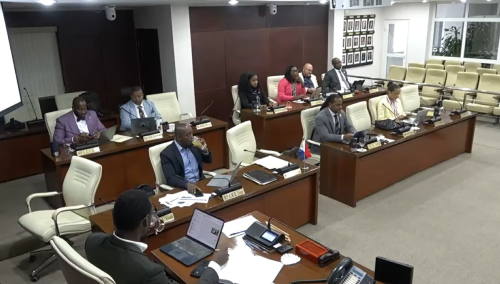 PHILIPSBURG:--- If there was one message that emerged from Friday's Central Committee budget debate, it was that Members of Parliament are no longer satisfied with approving millions in public spending without measurable results.
Using Finance Minister Marinka Gumbs' new policy-based budgeting framework as the foundation, MPs repeatedly argued that the government should now be judged by performance indicators, completed projects, and quarterly progress reports instead of promises.
Leading that charge was MP Francisco Lacroes, who called on the government to table key performance indicators (KPIs) for every ministry and commit to submitting quarterly reports to Parliament.
He questioned what consequences ministers would face if they failed to achieve the targets attached to their approved budgets.
"If ministries fail to meet their approved targets in 2026, what consequences or corrective measures will follow?" Lacroes asked.
Demand for measurable government
Lacroes also requested detailed information on every ministry's revenue stream, asking the government to identify:
- how much revenue each ministry generated;
- how much remains outstanding;
- how much income was lost because permits or licenses were delayed;
- which consultancy contracts were awarded;
- and how much additional revenue improved tax compliance is expected to generate.
He argued that staffing shortages are costing the government money because delayed licenses, permits, and approvals postpone revenue that should already be entering the Treasury.
Lewis demands accountability
MP Lyndon Lewis followed with one of the longest rounds of questioning during the debate.
Rather than concentrating on political criticism, Lewis repeatedly asked ministers to provide measurable benchmarks for virtually every policy objective contained in the 2026 budget.
Among his requests were:
- targets for reducing violent crime;
- police recruitment numbers;
- waiting times for specialist healthcare;
- labor inspection targets;
- scholarship beneficiaries;
- teacher vacancies;
- school maintenance schedules;
- affordable housing construction;
- road rehabilitation timelines;
- landfill milestones;
- drainage improvements;
- tourism growth targets;
- and measurable returns on public investment.
Lewis also questioned whether the government has introduced sufficient financial oversight to ensure ministries actually execute the projects Parliament approves each year.
Justice, roads, and housing
The Justice Ministry received particularly close scrutiny.
Questions focused on the construction timetable for the new prison, rehabilitation programs for inmates, police staffing levels, witness protection, youth crime prevention, immigration reforms, and the status of electronic monitoring.
The Ministry of VROMI faced equally detailed questioning regarding unfinished road projects, Dutch Quarter Road, Welgelegen Road, drainage improvements, landfill rehabilitation, waste export, affordable housing, consultant dependence and delays in capital project execution.
Revenue versus spending
Throughout the debate, MPs repeatedly returned to one central concern.
The government has presented a larger budget with higher projected revenues and expenditures, but Parliament wants evidence that ministries can actually execute the projects they propose.
MP Lacroes questioned whether the government would finally require audited financial statements from government-owned companies and introduce sanctions when boards fail to comply.
He also sought quarterly financial reporting on state-owned enterprises, including GEBE, cash flow statements, debt positions, and government guarantees.
Parliament raising the bar
Friday's debate demonstrated a noticeable shift in Parliament's approach.
Rather than arguing solely over individual line items, Members demanded implementation schedules, measurable deliverables, and regular reporting.
With Finance Minister Gumbs introducing policy-based budgeting—designed to link spending to results—MPs made it clear they intend to use the same framework to measure the performance of every minister over the next 12 months.
As ministers prepare their responses next week, they will not only have to defend their budgets but also explain exactly how and when they intend to deliver the promises attached to every guilder Parliament is being asked to approve.