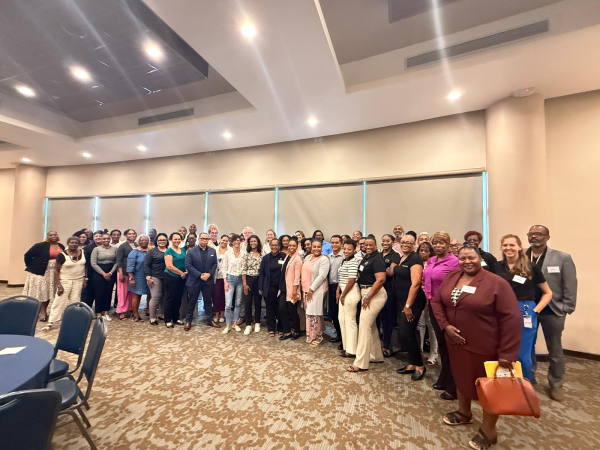
 PHILIPSBURG:--- Sint Maarten hosted the fifth edition of a regional forensic mental health seminar on March 9 and 10, 2026, marking the first time the event was held on the island. Organized through a collaboration between the Universities of Curaçao, Aruba and Utrecht, and Judicial & Institutional Services (J&IS) St. Maarten, the two-day seminar convened at the Simpson Bay Resort under the title "Psychiatric and Psychological Assessments and Reports as Entrance for Forensic Mental Health Care in the Caribbean Area." The event brought together prosecutors, judges, attorneys, psychiatrists, psychologists, academics, and justice and mental health professionals from across the region.
The central argument running through the seminar was unambiguous: without proper psychiatric and psychological assessment, the justice system responds to behavior without understanding its causes. That gap drives reoffending, limits effective intervention, and places sustained pressure on victims, professionals, and institutions alike. Across the Caribbean, mental health issues are too often identified late, forensic assessment capacity remains constrained, and access to specialized care is still developing. The result is that individuals cycle through the justice system without addressing the conditions underlying their behavior.
The seminar was formally opened by Cynthia Clarke-Filemon, Director of J&IS St. Maarten, Professor Frans Koenraadt of the Universities of Utrecht, Curaçao, and Aruba, and Minister of Justice Nathalie Tackling, each underscoring the urgency of strengthening the interface between the justice system and mental health care.
The program addressed the issue from legal, clinical, cultural, and practical perspectives. Manon Ridderbeks, Chief Public Prosecutor of Sint Maarten, outlined the prosecutorial role in initiating forensic mental health assessments within criminal proceedings. Attorney Sjamira Roseburg addressed how defense counsel can frame expert questions to produce meaningful, actionable outcomes. Judge Jos van Mulbregt examined how courts weigh mental health findings in determining criminal responsibility and sentencing.
Cultural and linguistic dimensions received significant attention. Dr. Eric Mijts demonstrated how language barriers, a persistent reality across the multilingual Caribbean, can directly undermine both the quality of assessments and defendants' access to justice. Dr. Margo Groenewoud examined the place of religion and spirituality in the functioning of Caribbean citizens, situating behavior within its broader social context. Professor Janine Janssen, criminologist and cultural anthropologist, presented on violence in dependent relationships and the recognition of early warning signals, arguing for data-driven and culturally informed approaches to detection. Professor Frans Koenraadt addressed the patterns and dynamics specific to domestic homicide, one of the most complex areas in regional forensic practice.
Psychiatrist Dr. Carl Blijd focused on the roots, triggers, and management of aggression, linking mental health directly to risk assessment. Dr. Gregory Richardson explored the role of identity, music, and cultural expression in shaping behavior. Forensic psychologist Johnny Boekhoudt and psychiatrist Nathalie Kingsale led an interactive case session in which participants applied assessment frameworks to real scenarios, a deliberate effort to move discussion from principle to practice. Aarti Baran delivered a hands-on session on self-defense and de-escalation, emphasizing proportional and controlled response in high-risk professional situations.
A panel discussion featuring Dr. Blijd, Director Clarke-Filemon, and Boekhoudt brought key themes together in direct exchange. Participants acknowledged the shared structural challenges: limited forensic capacity, delays between arrest and assessment, and insufficient integration between the justice and care systems. The seminar closed with two case presentations by J&IS probation officers Shelley Gordon and Ivan Plantein, who drew on active caseload experience to illustrate how policy, assessment, and intervention intersect in practice, grounding the academic discussion in operational reality.
Sint Maarten's hosting of this edition reflects the island's increasing engagement with justice reform at a regional level. Ongoing training, cross-jurisdictional collaboration, and growing institutional awareness are laying a foundation for more structured forensic capacity across the Kingdom. The work, however, remains incomplete.
The seminar's closing message was precise: a justice system that prioritizes assessment does not merely react to crime, it is positioned to prevent it. Building that capacity across the Caribbean is not a long-term aspiration. It is a present and pressing obligation.