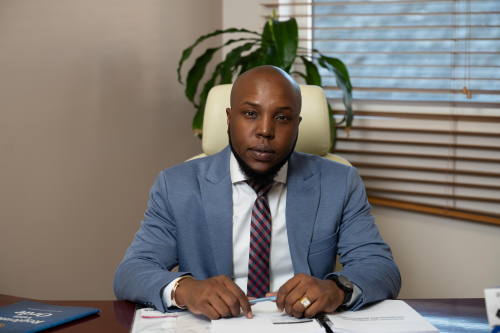
 PHILIPSBURG:--- Member of Parliament Egbert J. Doran is calling for greater policy alignment within the Council of Ministers, stating that public-private partnerships are a valuable and necessary tool for national development but must be applied consistently, including for the benefit of the country’s public schools.
Doran pointed to two recent government positions that, when viewed together, raise legitimate questions about coherence in infrastructure policy. On one hand, the Ministry of Public Housing, Spatial Planning, Environment and Infrastructure (VROMI) announced a partnership with the Gioia Group to rehabilitate the Simpson Bay Dock and surrounding public facilities, highlighting public-private cooperation as a pillar of modern governance, a move he applauds. On the other hand, the Ministry of Education, Culture, Youth and Sport (ECYS) has taken the position that infrastructure works cannot be accepted as donations for public schools, citing liability and accountability concerns.
“We are clearly seeing two different approaches to the same concept,” Doran said. “Public-private partnerships are being embraced as innovative and workable when it comes to economic and public infrastructure, and that is a good thing. It shows that government recognizes it cannot do everything alone. But that same openness must also extend to our schools.”
Doran stressed that his position is not about opposing development initiatives or questioning the value of partnerships in sectors like tourism and maritime infrastructure. Rather, he argues that the same governance capacity used to facilitate large-scale public works should also be used to address long-standing challenges in the education sector.
“If the government can structure agreements, oversight mechanisms, and accountability frameworks for major public assets such as docks and police facilities, then it stands to reason that similar safeguards can be developed for school infrastructure,” Doran stated. “The issue is not whether partnerships work. The issue is where we choose to apply them.”
According to Doran, concerns about liability and quality control raised by the Minister of ECYS, should not become a blanket barrier, particularly when classrooms across the country continue to struggle with heat, aging facilities, and deferred maintenance.
“No one is suggesting unregulated or unsupervised work,” he said. “What parents and teachers are asking for is the same level of creativity and problem-solving that government is already demonstrating elsewhere. If partnerships are good policy, they should be good policy for all critical public needs, including education.”
Doran concluded by urging the Council of Ministers to bring greater consistency to its approach, noting that public-private cooperation should be guided by shared national priorities rather than siloed ministerial interpretations.
“Our development strategy must be balanced,” he said. “Economic infrastructure and educational infrastructure are not competing interests. They are both investments in the future of St. Maarten.”