By ir. Damien Richardson
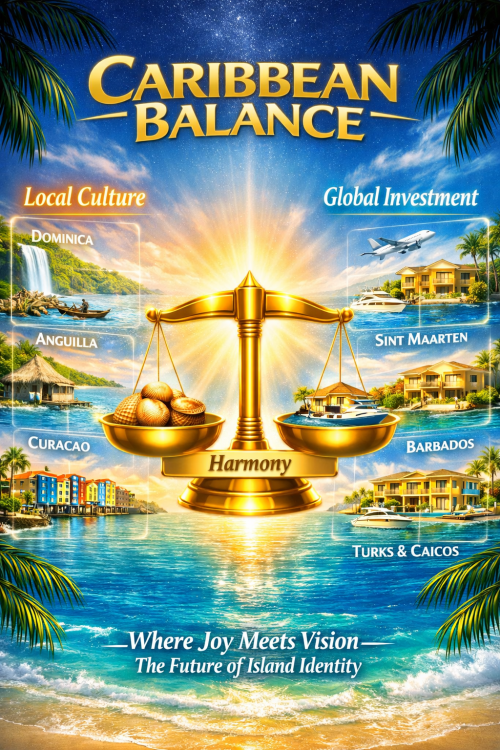 PHILIPSBURG:--- The Caribbean is undergoing a profound transformation. Wealth is arriving at a pace the region has never experienced. New villas rise along familiar coastlines. Private jets land where fishing boats once anchored. Investors see opportunity. Developers see potential. The world sees paradise. But those who live here understand something deeper: the Caribbean is not simply a destination. It is a way of relating to the world.
Caribbean life is built on a culture of joy — not the superficial joy of entertainment, but a relational joy rooted in community, generosity, rhythm, and belonging. This joy is not a product. It is a value system. And in a world hungry for authenticity, it may be the region’s most strategic advantage.
As global wealth accelerates, the question is no longer only how the Caribbean balances identity with investment. The real question is how the region can share its joy without losing it. Sharing joy, when done with intention, becomes a form of sovereignty.
Across the region, two development models have emerged. Both are grounded in Caribbean values, yet each expresses them differently. Together, they reveal how identity shapes economic outcomes.
Dominica represents the guardianship model. It protects its ecological soul not to restrict tourism, but to preserve the intimate relationship between people and land. Its forests and rivers are not attractions; they are partners in the island’s identity. Environmental stewardship becomes cultural preservation.
St. Barthélemy demonstrates the power of architectural discipline. The island enforces a strict visual language — no high‑rises, no visual noise, no architectural ego. Beauty is treated as a shared experience. Wealth adapts to the island, not the other way around.
Curaçao offers another form of guardianship. Its UNESCO‑protected historic core is a living city where color, rhythm, and memory shape daily life. Heritage is not nostalgia. It is a strategy. Curaçao proves that cultural continuity can be an economic engine.
Anguilla adds a quiet but powerful dimension. The island has built a reputation for understated luxury anchored in local warmth and simplicity. Its low‑rise development model, its emphasis on locally owned hospitality, and its refusal to chase mass tourism have created a brand defined by intimacy rather than spectacle. Anguilla’s strength lies in its quiet confidence — a place where the experience is shaped not by scale, but by sincerity.
Sint Maarten stands at a different kind of crossroads. As one of the region’s most dynamic hubs — a crossroads of cultures, aviation, commerce, and tourism — it carries both the benefits and the pressures of high visibility. The island’s dual‑nation structure, its dense tourism economy, and its limited landmass create a unique tension between opportunity and vulnerability. Yet Sint Maarten’s greatest asset remains its people: resilient, multilingual, entrepreneurial, and deeply relational. The challenge ahead is ensuring that large‑scale development does not overshadow the human-scale vibrancy that defines the island’s character.
Other islands have chosen a more integrative path. They welcome global capital, but they do so with intention and clarity. The Cayman Islands integrates finance and tourism while ensuring locals remain central to the workforce and the social fabric. Its success is engineered through regulation and transparency.
Barbados blends culture and capital with confidence. Its creative industries, festivals, and remote‑worker programs invite the world to participate in a distinctly Barbadian way of life. Culture becomes an export, not an ornament.
Turks & Caicos uses spatial discipline to manage luxury. By concentrating development in Grace Bay and protecting the rest of the island, it ensures that community life remains intact. This is cultural preservation expressed through planning.
Yet even with these successes, the region faces a real risk. When wealth arrives too fast, locals can disappear from their own landscape. Land prices rise. Culture becomes performance. Coastlines become gated. A Caribbean without Caribbean people is not the Caribbean. It is a theme park.
A useful lens is the Wealth‑to‑Local Presence Ratio — a measure of how strongly foreign wealth shapes an island relative to its local population strength. Cayman, the Bahamas, and Turks & Caicos sit at the high end. Barbados, Curaçao, Anguilla, and Sint Maarten occupy the middle. Dominica remains anchored on the low‑moderate side. The pattern is clear: where wealth dominates, relational culture weakens. Where locals remain strong, joy remains abundant.
The path forward requires a shift in mindset. The Caribbean is not selling beaches. It is sharing a way of being. To protect that way of being, islands must preserve architectural identity, ensure local equity in major developments, protect coastlines as shared spaces, strengthen cultural industries, and educate the next generation to lead in high‑value fields with Caribbean values at the center.
The Caribbean stands at a crossroads. It can become a region shaped by wealth, or it can become a region that shapes wealth through its values. The future belongs to those who understand that the Caribbean’s greatest contribution to the world is not luxury. It is joy — relational, generous, and deeply human.
And joy, when shared with intention, becomes a transformative force.
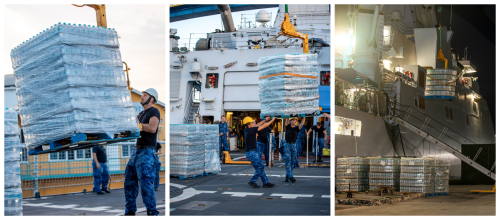 HNLMS Groningen departed from Curaçao this morning for Venezuela to deliver emergency aid following the devastating earthquakes in the country. The naval vessel was loaded in Curaçao with supplies, including water and relief goods. Also on board are an NH90 helicopter and two FRISCs (fast interceptor boats).
 PHILIPSBURG:--- Xtratight Entertainment is proud to announce the launch of the Back 2 School Expo (B2S Expo), a first-of-its-kind event that will bring together schools, businesses, government agencies, health organizations, community groups, and service providers under one roof to help families prepare for the upcoming academic year.
 PHILIPSBURG:--- More than two years after making prepaid electricity one of the central pillars of his 2024 parliamentary election campaign, former parliamentary candidate Julian Rollocks Jr. is renewing his call for the Government and NV GEBE to stop talking and finally implement what he describes as a proven solution that would benefit every household and business in Sint Maarten.