70-Year-Old Prison Release Law Raises Questions as Pointe Blanche Overcrowding Crisis Deepens.

~Historic 1953 regulation places heavy responsibility on prison officials, rehabilitation agencies and the Minister of Justice in deciding who qualifies for early release.~

prsionreleaselaw15072026PHILIPSBURG – As the Pointe Blanche Prison continues to struggle with severe overcrowding that has already forced the release of pre-trial detainees in recent months, an examination of the Reclasseringsbesluit 1953 (Rehabilitation Decree 1953) reveals that the legal framework governing conditional release dates back more than seven decades and places significant emphasis on rehabilitation, supervision, and ministerial oversight rather than prison capacity alone.

The decree, adopted on November 20, 1953, remains in force today and establishes the procedures for probation, rehabilitation services, and conditional release of prisoners. Although originally enacted for Curaçao and the former Netherlands Antilles, it continues to form part of the legal foundation applicable within the Caribbean parts of the Kingdom where it remains in effect.

The document has gained renewed relevance following recent court proceedings in St. Maarten, where prosecutors acknowledged that detention capacity at Pointe Blanche has become so limited that suspects have had to be released under strict conditions.

Rehabilitation Before Punishment

Rather than treating imprisonment as the end of the criminal justice process, the decree focuses extensively on rehabilitation.

It provides for government-supported rehabilitation organizations tasked with helping offenders reintegrate into society while reducing the likelihood of reoffending. These organizations may receive government subsidies but are subject to strict oversight by the Minister of Justice, including inspections, financial accountability, and reporting obligations.

Every organization participating in rehabilitation must accept government supervision and comply with regulations established by the Minister.

Independent Rehabilitation Council

One of the decree's most significant features is the establishment of the Central Rehabilitation Council.

The council is responsible for:

  • Supervising rehabilitation organizations;
  • Advising the Minister of Justice;
  • Inspecting prisons;
  • Conducting investigations;
  • Making recommendations to improve rehabilitation services.

Members of the council are granted unrestricted access to prisons and may obtain information directly from correctional institutions to carry out their duties.

The council must also submit an annual report to the Minister detailing its findings and recommendations.

Conditional Release is Not Automatic

Perhaps the most important section of the decree concerns conditional release (voorwaardelijke invrijheidstelling).

The regulation makes clear that prisoners are not automatically released after serving a portion of their sentence.

Instead, approximately two months before an inmate becomes eligible, the prison director must prepare a detailed recommendation for the Minister.

That recommendation must include:

  • The inmate's personality;
  • Prison behavior;
  • Employment history;
  • Character assessment;
  • Family circumstances;
  • Rehabilitation prospects;
  • Risk of reoffending;
  • Recommended special conditions;
  • Whether continued supervision is necessary.

The prison director must first obtain advice from rehabilitation officers before making a recommendation.

Minister Holds Final Authority

Contrary to public perception, the prison director does not decide who walks free.

The final decision rests entirely with the Minister of Justice, who receives:

  • The prison director's recommendation;
  • Reports from rehabilitation officers;
  • Advice from the Central Rehabilitation Council;
  • Information from prosecutors;
  • Police reports;
  • Other supporting documentation.

Only after reviewing this extensive documentation may the Minister approve or deny conditional release.

Strict Conditions Continue After Release

Even after release, prisoners remain under strict supervision.

Within 48 hours, every conditionally released inmate must report to the local police chief.

They must also report any change of residence during the probationary period.

Failure to report immediately triggers notification of the Public Prosecutor, who must begin efforts to locate the offender.

Continuous Monitoring

Released prisoners may remain under the supervision of rehabilitation officers or specially appointed supervisors.

These supervisors must regularly report on:

  • The offender's conduct;
  • Compliance with release conditions;
  • Any violations;
  • Any circumstances that could justify suspension or revocation of the release.

The Minister retains the authority to suspend or revoke the conditional release if the offender violates the imposed conditions.

Emphasis on Reintegration

The decree repeatedly stresses that supervision should not unnecessarily interfere with a person's liberty or ability to reintegrate into society.

Officials are specifically instructed to avoid actions that could unnecessarily limit a released prisoner's freedom or create social disadvantages while still ensuring compliance with court-imposed conditions.

Questions in Today's Context

While the decree provides a comprehensive rehabilitation system, it was written in 1953, decades before today's realities of organized crime, cross-border criminal activity, modern forensic investigations, and the severe overcrowding now facing the Pointe Blanche Prison.

Recent cases in St. Maarten have highlighted that prosecutors are being forced to make operational decisions because of insufficient detention space. Those developments raise broader questions about whether legislation drafted more than 70 years ago remains fully suited to address the island's current correctional challenges.

The regulation itself, however, makes no provision for prison overcrowding as an independent ground for release. Instead, it requires a structured assessment centered on rehabilitation, behavior, supervision, and ministerial approval before conditional release is granted.

For many observers, that distinction has become increasingly significant as St. Maarten continues to grapple with the long-running crisis at the Pointe Blanche Prison and renewed debate over the adequacy of its legal and correctional framework.
Read the law here.


Second Dutch Summer camp at MPC a success.

dutchsummercamp15072026PHILIPSBURG:--- On Friday, July 10, the second Dutch Summer Camp at Milton Peters College concluded successfully with an exhibition. The camp, aimed at strengthening Dutch language skills, welcomed 32 prospective students who will attend either Milton Peters College or Sundial School in the 2026–2027 academic year.

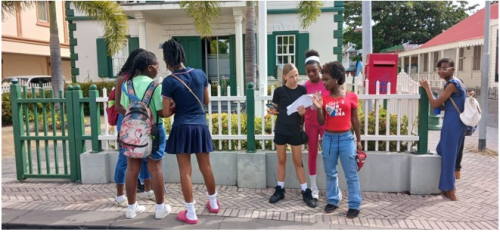
Throughout the week, participants were immersed in Dutch through engaging, hands-on activities. They gave presentations about themselves, created a vlog during a scavenger hunt in Philipsburg, followed a recipe to make a fruit bowl, learned basic woodworking by making a tangram, and practiced interview and acting skills.
During Friday’s exhibition, students enthusiastically shared their work with parents and representatives of the Ministry of Education, Culture, Youth and Sport (MECYS). All participants said they would recommend the camp to their friends, and most reported feeling more confident in Dutch and better prepared for high school. Parents also gave the camp high marks, praising the creative approach to language learning, with several suggesting it should have lasted longer.
SVOBE appreciates this valuable feedback and thanks MECYS for its financial support, as well as the dedicated teachers Soniëlle Petres, Jessica Boldewijn, and Taryn Hassell, and coordinators Shanella Petrona and Saskia Kliphuis for their creativity, energy, and commitment.

$52 Million Point Blanche Prison Project faces questions over shifting timeline.

~Earlier plans projected completion by the end of 2027, while the January groundbreaking announcement now gives construction approximately three years.~

prisontimeline14072026PHILIPSBURG:--- The groundbreaking for the long-awaited new Point Blanche Prison was held on January 15, 2026, but documents reviewed by SMN News show that the publicly announced timeline for the project has changed significantly from the schedule presented when Phase 2 was launched in November 2024.
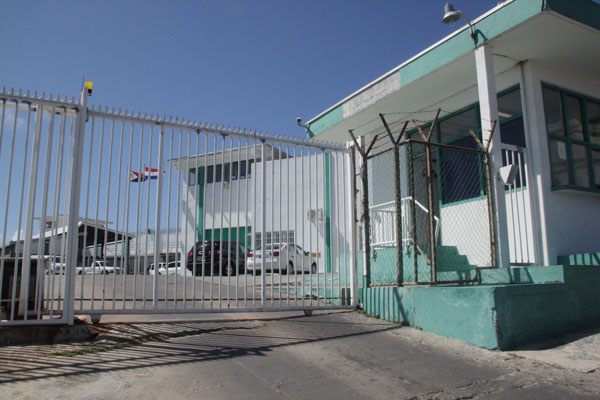
The project is being implemented by the United Nations Office for Project Services, UNOPS, as part of the Ministry of Justice’s broader Detention Sector Reform Program.

According to the official January 2026 announcement, the new prison represents a joint investment of US$52 million by the Government of St. Maarten and the Netherlands’ Ministry of the Interior and Kingdom Relations.

The facility is expected to cover approximately 10,000 square meters, consisting of a four-story main building, and accommodate as many as 196 inmates, more than doubling the country’s current detention capacity.

However, the timeline now being presented deserves close public scrutiny.

Earlier Completion date no longer reflected

Government information released on November 18, 2024, described Phase 2 as a construction project with an intended duration of approximately 35 months.

At that time, construction was expected to begin in 2025, with the first phase becoming operational by mid-2026 and final completion expected by the end of 2027.

The January 15, 2026, press release now states that construction is expected to take approximately three years. The announcement does not provide a specific contractual completion date or explain how the three-year construction period relates to the earlier end-of-2027 completion target.

That difference is significant.

If the three-year period is calculated from January 2026 groundbreaking, the project would extend beyond the previously announced end-of-2027 target. The Government and UNOPS should therefore clearly state the official commencement date, contractual completion date and whether the original project schedule has formally been revised.

Contractor Registered Months Before Groundbreaking

The Ministry of Justice announced that UNOPS contracted Artelia JV as the supervising engineer and CESAF JV as the construction contractor.

Commercial Register records show that CESAF JV Sint Maarten B.V. was incorporated on October 7, 2025, registered on October 14, 2025, and last amended on November 25, 2025.

The company has a nominal capital of 100 shares valued at US$1 each and lists its business addresses as Welfare Road 68, Unit 1, Cole Bay Lagoon.

The registered Managing Director is Diego Pol, an Italian national who entered the function on October 7, 2025, and is listed as solely authorized to represent the company.

The company’s registered activities include construction, utility works, road and civil engineering, plumbing, air-conditioning, electrical works, maintenance, importation of building materials and heavy equipment, and real-estate project management.

Joint Venture and International Experience

Research conducted in January identified the contractor structure as JV CESAF–COSEDIL, operating locally through CESAF JV Sint Maarten B.V.

The research found publicly available indications linking Italian company COSEDIL to an earlier prison project in Berat, Albania. It also identified a possible connection to a detention project in Fier, although the available information was insufficient to establish COSEDIL as the project’s principal contractor.

For the prison projects in Shkodër and Elbasan, the available documents identified other contractors.

The research did not establish wrongdoings by CESAF, COSEDIL, Diego Pol or the local joint-venture company.

It did, however, note that publicly accessible UNOPS procurement notices did not clearly display the final contract-award details and recommended obtaining the official UNOPS award documentation and contract summary to formally confirm the successful bidder and the precise scope of the contract.

Promise of Local Employment

The January announcement states that construction will employ an average of more than 100 workers daily, combining local labor with international expertise.

Government also said the contractor and supervising engineer would prioritize local engagement, skills development and knowledge transfer, while using local suppliers, subcontractors and service providers.

Those commitments should now be supported by measurable figures.

The public should be told how many workers are currently employed, how many are St. Maarten residents, which local subcontractors have been engaged and what percentage of the construction expenditure will remain in the local economy.

Facility designed for 196 Inmates

The new facility is expected to include healthcare services, a basic mental health unit, family-visitation areas, indoor and outdoor recreational spaces, workshops and classrooms.

Vocational training is expected to include carpentry, welding, and mechanics.

The building is also designed to withstand Category 5 hurricanes and seismic activity, using reinforced concrete and corrosion-resistant materials suitable for the coastal environment. Natural ventilation and energy-efficient design measures are also included.

These specifications are important, but the immediate issue is whether the work is advancing according to an approved and publicly accountable schedule.

Ground Was Broken—Now the Public Needs a Construction Schedule

The January ceremony was described as the official launch of construction.

Six months later, the Government and UNOPS should disclose the current stage of work, the agreed contractual milestones and the confirmed completion date.

The questions are straightforward:

Has site preparation been completed? Has structural construction begun? Is the project operating within the US$52 million investment? Have there been changes to the scope or schedule? Does the end-of-2027 completion date still apply, or has it been replaced by a later target?

The new Point Blanche Prison is not an ordinary building project. It is being presented as the infrastructure solution to St. Maarten’s longstanding detention crisis.

With US$52 million committed, capacity planned for 196 inmates and construction now officially underway, the country is entitled to more than ceremonial assurances.

It is entitled to a clear timeline, transparent contract information and verifiable progress.

Pointe Blanche Prison at Breaking Point: Overcrowding Now Undermining Justice System.

~Cell Shortages force release of suspects while rehabilitation programs continue to disappear~


pointblachepprison31012011PHILIPSBURG:--- The crisis at the Pointe Blanche House of Detention has reached a critical stage, with severe overcrowding, deteriorating detention conditions, and the collapse of meaningful rehabilitation programs now directly affecting the administration of justice in St. Maarten.

Recent confirmation from the Prosecutor's Office has revealed that the prison's lack of available detention space is no longer merely an operational challenge—it is influencing judicial decisions, forcing prosecutors to seek the release of suspects who would otherwise remain behind bars pending trial.

In a recent court matter, the Prosecutor's Office openly acknowledged that the suspension of a suspect's pre-trial detention was requested because of the lack of detention capacity at Pointe Blanche Prison. Prosecutors further admitted that these decisions are becoming increasingly common due to the chronic shortage of available cells.

Rather than requesting an outright release, prosecutors sought a suspension of detention under strict court-imposed conditions, including the surrender of the suspect's passport and a restraining order protecting the alleged victim. The Court approved the request.

The admission has once again placed the spotlight on the worsening conditions inside the country's only correctional facility.

Overcrowding Now Dictating Criminal Justice

For years, successive governments have acknowledged that Pointe Blanche suffers from overcrowding, deteriorating infrastructure, staff shortages, and aging facilities. However, the latest disclosure demonstrates that the problem has escalated to the point where prison capacity is now influencing decisions that should be based solely on legal considerations.

Legal professionals warn that detention space should never become the determining factor in whether a suspect remains in custody. Yet the Prosecutor's Office has confirmed that operational realities are forcing difficult decisions to ensure that the limited number of available cells are reserved for the most urgent cases.

The situation has raised concerns among victims, law enforcement officials, and the wider public, who increasingly question whether the justice system can function effectively while its correctional facility operates beyond capacity.

Isolation cells no longer available for discipline

One of the clearest signs of the prison's overcrowding is the reported use of isolation cells to house members of the general inmate population.

Sources familiar with conditions inside Pointe Blanche indicate that cells originally designed for disciplinary segregation or inmate protection are now occupied simply because there are no other spaces available.

This means prison management reportedly has little or no dedicated disciplinary housing left.

When inmates become involved in fights, assault other prisoners, or violate prison regulations, correctional officers are often unable to isolate them as intended because the segregation units are already full.

Instead, disciplinary options have become extremely limited, leaving officers with fewer tools to maintain order inside the facility.

Correctional experts warn that this not only undermines prison discipline but also increases security risks for both inmates and prison staff.

Rehabilitation has Become an afterthought

Equally troubling is the continued decline of rehabilitation within Pointe Blanche.

While incarceration is intended to protect society, correctional institutions are also expected to prepare offenders to successfully reintegrate into the community upon release.

That objective appears to be slipping further out of reach.

Information obtained regarding current prison operations indicates that many of the educational and vocational programs that once formed part of inmate rehabilitation have either been reduced or discontinued altogether.

The General Educational Development (GED) program, which previously provided inmates with an opportunity to earn an internationally recognized academic qualification, is reportedly no longer available.

Traditional educational instruction and structured vocational training have also largely disappeared.

Instead, many of the activities currently offered inside the prison are supported through European Union-funded initiatives, including photography, modeling, and other enrichment activities.

While those programs provide inmates with constructive engagement, critics argue they cannot replace comprehensive rehabilitation initiatives designed to reduce recidivism.

Meaningful correctional rehabilitation normally includes literacy education, vocational certification, trade skills, anger management, substance abuse treatment, life-skills coaching, employment preparation, and psychological counseling.

Without those opportunities, inmates leave prison with little improvement in their educational or employment prospects, increasing the likelihood that they will reoffend.

An Expensive Cycle of Reoffending

Correctional specialists have long maintained that prisons should do more than simply warehouse offenders.

Every inmate who leaves prison without education, vocational skills, behavioral intervention, or treatment represents a greater risk of returning to criminal activity.

The absence of meaningful rehabilitation creates a costly cycle in which offenders repeatedly enter and exit the justice system, placing continued strain on police, prosecutors, the courts, and correctional services.

Investing in rehabilitation has consistently been shown internationally to reduce repeat offending while improving public safety.

Years of warnings, few lasting solutions

The problems facing Pointe Blanche are far from new.

Over the years, reports have highlighted deteriorating infrastructure, inadequate maintenance, overcrowded housing units, staffing shortages, damaged facilities, and the urgent need for prison modernization.

Despite repeated promises by successive administrations, many of those longstanding deficiencies remain unresolved.

The prison continues to operate under conditions that challenge both security and rehabilitation, while correctional officers are expected to manage increasingly complex inmate populations with limited resources.

Justice system feeling the consequences

The Prosecutor's Office's recent admission makes clear that the consequences of prison overcrowding now extend beyond the prison walls.

The lack of available detention space is affecting prosecutorial decisions, influencing court proceedings, and raising legitimate concerns among victims who expect accused persons to remain in custody while awaiting trial.

At the same time, the lack of meaningful rehabilitation means many inmates leave prison no better equipped for life than when they entered.

Government faces growing pressure

The worsening situation raises several pressing questions for government:

  • When will additional detention capacity become available?
  • Why are isolation cells being used to house the general prison population?
  • Why have accredited educational programs such as GED disappeared?
  • What concrete rehabilitation strategy exists beyond externally funded projects?
  • How will government restore vocational training, education, and behavioral treatment programs?
  • What long-term plan exists to ensure that overcrowding no longer compromises the administration of justice?

The Pointe Blanche House of Detention was never intended to operate under the conditions now being described. Yet overcrowding has reached a point where correctional management, rehabilitation, and even criminal prosecutions are being affected.

The prison crisis is no longer simply a correctional issue. It has become a national justice issue, one that directly impacts public safety, victims' rights, and confidence in St. Maarten's criminal justice system. Without immediate investment in expanded detention capacity, modern facilities, and meaningful rehabilitation programs, the crisis at Pointe Blanche is likely to deepen, with consequences extending far beyond the prison gates.

How Sint Maarten's National Budget is Prepared: Understanding the Budget Process.

marinkagumbs14072026PHILIPSBURG:---  As public discussion about the National Budget continues, the Minister of Finance believes it is important to clearly explain how the Government’s budget is prepared and what role each part of Government plays in that process.

Preparing the National Budget is a shared responsibility. The Ministry of Finance coordinates the process, but it does not prepare budgets for other Ministries or decide how much money each Ministry gets. Those decisions are made together by the Council of Ministers, in line with the Comptabiliteitslandsverordening.

To support a better understanding of the process, the Minister of Finance provides the following step-by-step overview.

Step 1: Strategic Budget Session

The budget process begins with a strategic session involving Ministers, Secretaries General, Financial Controllers, Cabinet staff, the Financial Policy Department (FBBB), and the Policy-Based Budgeting (PBB) Project Team. During this session, Government's priorities, national needs, and available financial resources are discussed. Ministers present the priorities of their respective Ministries and identify the resources required to achieve their policy objectives.

Step 2: Council of Ministers Establishes the Budget Framework

Based on these discussions, the Council of Ministers collectively determines the Government's policy priorities, strategic objectives, budget parameters, and financial allocations for the upcoming fiscal year.

This is a collective decision-making process in which Ministers advocate for their Ministries while balancing the needs of Government as a whole, within the available fiscal space. For example, during one budget cycle, the Ministries of VSA and TEATT agreed to reduce portions of their own budget requests so that funding could be made available for a priority within the Ministry of Justice.Once approved, these allocations become the official budget parameters within which each Ministry must prepare its budget. These are not recommendations. They form the financial framework for the National Budget.

Step 3: Ministries Prepare Their Budgets

Each Ministry prepares its own budget based on the priorities and financial allocations approved

by the Council of Ministers. Every Minister remains responsible for determining how the approved resources will be utilized to achieve the Ministry's policy objectives. The Ministry of Finance does not prepare another Ministry's budget. Once completed, each Ministry submits its budget to the Ministry of Finance for consolidation.


Step 4: Ministry of Finance Coordinates and Consolidates the Budget

The Ministry of Finance reviews each Ministry's submission to ensure that it:

  • complies with the financial parameters approved by the Council of Ministers;
  • is complete and internally consistent;
  • is fiscally sustainable; and
  • can be incorporated into the National Budget.

This is a coordination function—not one of rewriting or reducing another Ministry's budget. If a Ministry submits a budget exceeding its approved allocation, it cannot simply be incorporated into the National Budget. Since the National Budget is one consolidated financial document, any increase by one Ministry affects the Government's overall expenditure. Unless additional revenue is identified or expenditure is reduced elsewhere by a decision of the Council of Ministers, the budget would no longer be balanced.

The Ministry of Finance therefore works with Ministries to bring their submissions within the agreed framework. These adjustments implement decisions already made by the Council of Ministers; they are not unilateral budget cuts by the Minister of Finance.

Meeting submission deadlines is equally important. The National Budget cannot advance until every Ministry has submitted its budget. Delays by one Ministry delay the entire budget process. During the 2026 and 2027 budget cycles, the Ministry of Finance, together with the Financial Policy Department (FBB) and the Policy-Based Budgeting (PBB) Project Team, worked closely with all Ministries to provide technical guidance, improve planning, and strengthen budget submissions.

Step 5: Internal Legal Review

Once the draft National Budget has been consolidated, it is submitted to the Department of Legal Affairs for legal review. This review ensures that the draft budget complies with all applicable legal and procedural

requirements before it is presented to the Council of Ministers for approval.

Step 6: Council of Ministers Approves the Draft National Budget

Following the legal review, the draft National Budget is submitted to the Council of Ministers. The Council reviews the complete budget package and, if satisfied, approves it as the Government's official draft National Budget. This approval is a collective decision of Government.

Step 7: External Review by the CFT and Council of Advice

After approval by the Council of Ministers, the draft National Budget is submitted for external review by:

  • the Committee for Financial Supervision (CFT); and
  • the Council of Advice (RvA).

Each institution reviews the budget within its statutory mandate and may provide comments, advice, or recommendations.

Step 8: Processing of External Advice

The Ministry of Finance coordinates the incorporation of the recommendations received from the CFT and the Council of Advice.Where amendments are required, these are made to ensure that the draft budget remains legally compliant, fiscally responsible, and consistent with the recommendations received.

Step 9: Final Legal Review

Following the incorporation of the external advice, the revised draft National Budget is returned to the Department of Legal Affairs for a final legal review. Legal Affairs verifies that all required amendments have been correctly incorporated and confirms that the budget is legally and procedurally sound before proceeding to Parliament. This serves as an additional safeguard to ensure that the budget is complete, consistent, and

compliant with all applicable legal requirements.

Step 10: Submission to Parliament

After completion of all required reviews and approvals, the draft National Budget is submitted to Parliament through the Governor. Parliament then debates, considers, and ultimately decides on the approval of the National Budget in accordance with its constitutional procedures.

Clarifying Common Misconceptions

  • Misconception: The Minister of Finance has the authority to unilaterally determine another Ministry's budget.
  • Fact: Financial allocations are determined collectively by the Council of Ministers. Each Ministry prepares and executes its own budget. The Ministry of Finance coordinates the budget process, ensures compliance with the framework approved by the Council of Ministers, and consolidates the National Budget in accordance with the Comptabiliteitslandsverordening.
  • Misconception: Any increase requested by a Ministry should automatically be reflected in the National Budget.
  • Fact: Budget requests are assessed against the financial framework approved by the Council of Ministers, the country's available fiscal space, and the Ministry's demonstrated ability to effectively utilize additional resources. Not every request can or should be accommodated.
  • Misconception: If a Ministry requests additional funding, it is because its existing budget is insufficient.
  • Fact: Budget requests are evaluated alongside historical expenditure patterns. In some cases, Ministries requesting additional funding have not fully utilized or absorbed the budgets already allocated to them in previous fiscal years. Strengthening budget execution remains an important consideration when assessing requests for additional resources.
  • Misconception: Every proposed initiative can be executed immediately if additional funds are made available.
  • Fact: Successful implementation depends on more than funding alone. Some initiatives require enabling legislation, approved policies, organizational restructuring, procurement processes, or specialized personnel before they can be effectively executed. Where these prerequisites are not yet in place, additional funding alone will not result in successful implementation.
  • Misconception: The Ministry of Finance cut Ministry budgets during the 2026 and 2027 budget processes.
  • Fact: No Ministry's budget was reduced. Every Ministry received an increase compared to the previous fiscal year. Discussions centered on ensuring that requested increases remained within the financial allocations and budget parameters collectively approved by the Council of Ministers.

The Minister of Finance emphasizes that the budget process depends on every Ministry fulfilling its responsibilities within the framework approved by the Council of Ministers. Each Ministry prepares and executes its own budget, while the Ministry of Finance coordinates the process.

Respecting the approved budget ceilings and timelines is essential to preserve the credibility of the National budget and prevent unnecessary delays. No individual Minister is above the collective decisions of the Council of Ministers. The Ministry of Finance remains committed to supporting Ministries in strengthening financial planning, improving budget quality, and ensuring that public funds are managed responsibly,

transparently, and in accordance with the law.


Subcategories