By Terence Jandroep, CRA, CQA, CLA Certified Risk Auditor & Forensic Integrity Specialist
 In the specialized field of Forensic Integrity Auditing (FIA) and preemptive risk analysis, we often identify vulnerabilities within systems that are not merely technical, but behavioral. One of the most corrosive structural risks to fiscal integrity emerged in the late 1980s and has since solidified into a systemic crisis: the transition of government tax inspectors into private independent consultancy.
To protect the sanctity of the public treasury and the objectivity of the audit process, we must address this "revolving door" not as a career move, but as a fundamental breach of state security.
The Genesis of Insider Advantage (Post-1980s)
Since the late 1980s, the complexity of global tax codes and the digitalization of audit trails created a premium on "inside knowledge." During this era, a pattern emerged where high-level officials began migrating to the private sector, selling the very blueprints they helped draft.
As a Certified Risk Auditor, I view this through the lens of Information Asymmetry. When a former inspector enters the private sector, they are not just providing legal advice; they are providing a map of the government's internal "blind spots."
A Case of Government Spionage
The term "consultancy" often acts as a polite veneer for what is effectively Government espionage. When a former official leverages their tenure for private gain, they engage in several high-risk activities:
- Systemic Mapping: They possess intimate knowledge of the "Risk Selection" algorithms used by tax authorities. This allows clients to structure transactions that intentionally bypass the triggers for a formal audit.
- Protocol Extraction: They carry confidential administrative benchmarks and internal "settlement ranges" that were never intended for public or commercial dissemination.
- The "Shadow" Influence: By maintaining social and professional ties with active inspectors, these consultants can exert psychological pressure or gain unauthorized intelligence on the progress of ongoing fiscal litigation.
The Risk to Audit Integrity
From a forensic perspective, the presence of a former insider on the "defense" side of a tax dispute compromises the Forensic Integrity Audit (FIA).
- Technical Manipulation: They understand the specific software vulnerabilities and data-entry shortcuts used by government staff, allowing them to "sanitize" records in a way that an external auditor might miss.
- Erosion of Public Trust: When the public perceives that a tax inspector is simply "auditioning" for a lucrative private role while still on the state payroll, the moral authority of the tax office evaporates.
- Conflict of Interest: There is an inherent risk that active inspectors may be less rigorous when auditing a firm represented by their former supervisor or colleague, fearing future professional repercussions or hoping for a similar "exit" path.
The Professional Mandate: A Call for a Permanent Ban
In the interest of ISO 9001 standards and the principles of preemptive risk containment, the solution is clear. We must implement a mandatory ban or, at minimum, a stringent ten-year "cooling-off" period for former inspectors.
The fiscal frontier cannot be defended if the guards are allowed to sell the keys to the gate. To restore integrity to our regional financial systems from Aruba to Sint Maarten we must recognize that the tools of the state belong to the public, not to the highest bidder in the private consultancy market. It is time to treat the "revolving door" as the National security threat it truly is.
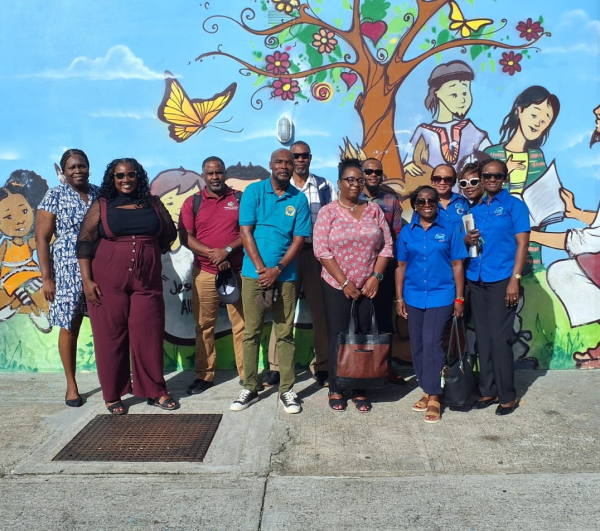 PHILIPSBURG:--- The Student Support Services Division (SSSD) recently hosted a ten-member delegation of school safety professionals from Antigua & Barbuda, Anguilla, and St. Lucia. During their week-long visit, the delegation paid a courtesy visit to the Honorable Minister of Education, Culture, Youth & Sport, Ms. Melissa Gumbs, as well as the Acting Secretary General, Mrs. Shermina Powell-Richardson.
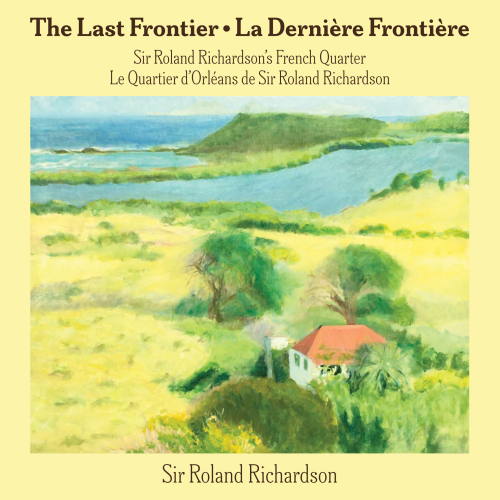 French Quarter, St. Martin:--- A new book by Roland Richardson launches at Amuseum Naturalis in French Quarter this Saturday. The book is titled The Last Frontier: Sir Roland Richardson’s French Quarter. It features artwork of people and places in French Quarter, and Richardson’s memories of the time he lived there. It is bilingual in English and French. The public is invited to the free, launch event. It will be held at Amuseum Naturalis at The Old House in French Quarter from 9 am to noon this Saturday, March 28th. The book was produced by the Les Fruits de Mer association.
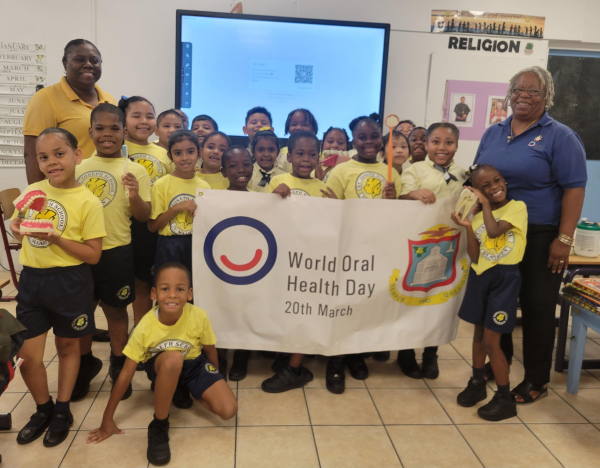 PHILIPSBURG (DCOMM):--- The Collective Prevention Services (CPS), a department within the Ministry of Public Health, Social Development and Labor (VSA), joined the international community in observing World Oral Health Day (WOHD) on Friday, March 20, under the theme “A Happy Mouth is… A Happy Life” with students at the St. Joseph Primary School with second graders.
 PHILIPSBURG:--- Internationally trained dancer, choreographer, and dance educator Clifford Henry has returned to Sint Maarten to conduct a series of dance workshops across the island, continuing his commitment to giving back to the community that shaped his artistic journey. Born and raised on Sint Maarten, Henry began his dance training at the National Institute of Arts (NIA), studying under respected teachers Clara Reyes, Arlene Halley, Rudolph Davis, Peggy Oulerich, Jerry Vanterpool, and Eolia ”Bee-Bee” Ada. His early foundation included ballet, modern, Horton technique, African dance, hip-hop, jazz, and other movement forms that would later influence his multidisciplinary approach to dance education. Mr. Henry also studied Capoeira under the guidance of Tyrone Phelipa.