Justice Ministry launches major immigration overhaul as new digital permit system goes live.

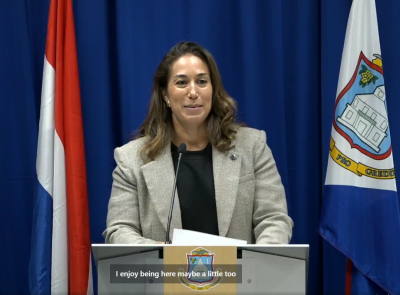
nathalie051120205PHILIPSBURG:---  St. Maarten's immigration system has entered a new era following the official launch of the Foreigners Management System (FMS), a digital platform that Justice Minister Nathalie Tackling says will transform the processing of residence permit applications.

The online system replaces years of paper-driven procedures that often resulted in lengthy processing times and heavy administrative workloads.

For the first time, applicants can create personal accounts, submit applications electronically, upload supporting documents, and monitor the progress of their requests from anywhere in the world without repeatedly visiting government offices.

The minister described the launch as one of the most significant modernization projects undertaken by the Ministry of Justice in recent years.

Beyond improving convenience for applicants, the system is expected to strengthen record management, improve security, reduce paperwork, increase transparency, and provide more efficient services for employers, attorneys and immigration officials.

Government has confirmed that all new residence permit applications and renewals must now be submitted exclusively through the Foreigners Management System.

Officials acknowledged that the transition will require public patience as staff and applicants adapt to the new procedures, but emphasized that the long-term benefits will far outweigh the temporary adjustments.

The immigration overhaul formed part of a broader update on ongoing reforms within the Ministry of Justice.

Tackling also highlighted recent Customs operations that resulted in officers intercepting concealed firearms and a significant quantity of suspected marijuana during cargo inspections, describing the seizures as proof that border security remains one of the country's strongest defenses against organized crime.

She further praised KPSM officers for proactive operations over the past two weeks, including firearm seizures, multiple arrests, robbery and shooting investigations, and intensified island-wide traffic enforcement targeting reckless scooter and motorcycle riders.

The minister said that modernization, stronger border security, and continued investment in justice institutions remain central pillars of the Ministry's reform agenda as the Government works to build a more efficient and responsive justice system.


Justice Minister confirms New Pointe Blanche Prison Construction advances as demolition begins.

nathalietackling04022026PHILIPSBURG:--- Justice Minister Nathalie Tackling announced Wednesday that construction of the long-awaited New Pointe Blanche Prison has officially entered its first operational phase, with demolition work beginning this week and the project finally showing visible signs of progress after years of delays.

According to the minister, contractors have completed the initial mobilization phase and are now finalizing the construction site camp, including offices and new parking facilities for workers and visitors. While this work may appear routine, it marks the official transition from planning to physical construction.

The next major milestone will be the demolition of an existing warehouse located within the prison compound, followed by extensive vegetation clearing on the northern section of the property.

The project is being implemented by the United Nations Office for Project Services (UNOPS), which continues to oversee construction together with local and international partners.

Tackling stressed that establishing the site camp and supporting infrastructure is a critical stage of any large-scale construction project because it allows contractors to safely coordinate equipment, personnel and logistics before the main prison buildings begin to rise.

The Justice Minister acknowledged that many residents have questioned whether the prison project had truly started because little activity has been visible from the public road. To address those concerns, Government intends to begin releasing photographs and video updates documenting construction progress.

"We recognize that much of what happens at the top of Point Blanche is not visible to the public," Tackling explained, adding that greater transparency will allow residents to follow the project's development.

The announcement comes at a critical time.

The existing Pointe Blanche prison continues to face severe overcrowding and deteriorating infrastructure. The shortage of detention space has already forced the Prosecutor's Office in recent weeks to request the suspension of pre-trial detention in certain criminal cases because sufficient jail capacity was unavailable.

Government has repeatedly stated that the new correctional facility is essential to restoring the country's justice system, improving inmate conditions, strengthening security, and ensuring St. Maarten complies with international detention standards.

While no revised completion date was announced during Wednesday's briefing, officials said UNOPS remains focused on maintaining construction efficiency while meeting strict quality, safety and oversight requirements.

With demolition now underway and ground preparation beginning, the long-promised prison project has entered a phase where tangible progress can finally be measured.

70-Year-Old Prison Release Law Raises Questions as Pointe Blanche Overcrowding Crisis Deepens.

~Historic 1953 regulation places heavy responsibility on prison officials, rehabilitation agencies and the Minister of Justice in deciding who qualifies for early release.~

prsionreleaselaw15072026PHILIPSBURG – As the Pointe Blanche Prison continues to struggle with severe overcrowding that has already forced the release of pre-trial detainees in recent months, an examination of the Reclasseringsbesluit 1953 (Rehabilitation Decree 1953) reveals that the legal framework governing conditional release dates back more than seven decades and places significant emphasis on rehabilitation, supervision, and ministerial oversight rather than prison capacity alone.

The decree, adopted on November 20, 1953, remains in force today and establishes the procedures for probation, rehabilitation services, and conditional release of prisoners. Although originally enacted for Curaçao and the former Netherlands Antilles, it continues to form part of the legal foundation applicable within the Caribbean parts of the Kingdom where it remains in effect.

The document has gained renewed relevance following recent court proceedings in St. Maarten, where prosecutors acknowledged that detention capacity at Pointe Blanche has become so limited that suspects have had to be released under strict conditions.

Rehabilitation Before Punishment

Rather than treating imprisonment as the end of the criminal justice process, the decree focuses extensively on rehabilitation.

It provides for government-supported rehabilitation organizations tasked with helping offenders reintegrate into society while reducing the likelihood of reoffending. These organizations may receive government subsidies but are subject to strict oversight by the Minister of Justice, including inspections, financial accountability, and reporting obligations.

Every organization participating in rehabilitation must accept government supervision and comply with regulations established by the Minister.

Independent Rehabilitation Council

One of the decree's most significant features is the establishment of the Central Rehabilitation Council.

The council is responsible for:

  • Supervising rehabilitation organizations;
  • Advising the Minister of Justice;
  • Inspecting prisons;
  • Conducting investigations;
  • Making recommendations to improve rehabilitation services.

Members of the council are granted unrestricted access to prisons and may obtain information directly from correctional institutions to carry out their duties.

The council must also submit an annual report to the Minister detailing its findings and recommendations.

Conditional Release is Not Automatic

Perhaps the most important section of the decree concerns conditional release (voorwaardelijke invrijheidstelling).

The regulation makes clear that prisoners are not automatically released after serving a portion of their sentence.

Instead, approximately two months before an inmate becomes eligible, the prison director must prepare a detailed recommendation for the Minister.

That recommendation must include:

  • The inmate's personality;
  • Prison behavior;
  • Employment history;
  • Character assessment;
  • Family circumstances;
  • Rehabilitation prospects;
  • Risk of reoffending;
  • Recommended special conditions;
  • Whether continued supervision is necessary.

The prison director must first obtain advice from rehabilitation officers before making a recommendation.

Minister Holds Final Authority

Contrary to public perception, the prison director does not decide who walks free.

The final decision rests entirely with the Minister of Justice, who receives:

  • The prison director's recommendation;
  • Reports from rehabilitation officers;
  • Advice from the Central Rehabilitation Council;
  • Information from prosecutors;
  • Police reports;
  • Other supporting documentation.

Only after reviewing this extensive documentation may the Minister approve or deny conditional release.

Strict Conditions Continue After Release

Even after release, prisoners remain under strict supervision.

Within 48 hours, every conditionally released inmate must report to the local police chief.

They must also report any change of residence during the probationary period.

Failure to report immediately triggers notification of the Public Prosecutor, who must begin efforts to locate the offender.

Continuous Monitoring

Released prisoners may remain under the supervision of rehabilitation officers or specially appointed supervisors.

These supervisors must regularly report on:

  • The offender's conduct;
  • Compliance with release conditions;
  • Any violations;
  • Any circumstances that could justify suspension or revocation of the release.

The Minister retains the authority to suspend or revoke the conditional release if the offender violates the imposed conditions.

Emphasis on Reintegration

The decree repeatedly stresses that supervision should not unnecessarily interfere with a person's liberty or ability to reintegrate into society.

Officials are specifically instructed to avoid actions that could unnecessarily limit a released prisoner's freedom or create social disadvantages while still ensuring compliance with court-imposed conditions.

Questions in Today's Context

While the decree provides a comprehensive rehabilitation system, it was written in 1953, decades before today's realities of organized crime, cross-border criminal activity, modern forensic investigations, and the severe overcrowding now facing the Pointe Blanche Prison.

Recent cases in St. Maarten have highlighted that prosecutors are being forced to make operational decisions because of insufficient detention space. Those developments raise broader questions about whether legislation drafted more than 70 years ago remains fully suited to address the island's current correctional challenges.

The regulation itself, however, makes no provision for prison overcrowding as an independent ground for release. Instead, it requires a structured assessment centered on rehabilitation, behavior, supervision, and ministerial approval before conditional release is granted.

For many observers, that distinction has become increasingly significant as St. Maarten continues to grapple with the long-running crisis at the Pointe Blanche Prison and renewed debate over the adequacy of its legal and correctional framework.

Read the law here.

Second Dutch Summer camp at MPC a success.

dutchsummercamp15072026PHILIPSBURG:--- On Friday, July 10, the second Dutch Summer Camp at Milton Peters College concluded successfully with an exhibition. The camp, aimed at strengthening Dutch language skills, welcomed 32 prospective students who will attend either Milton Peters College or Sundial School in the 2026–2027 academic year.
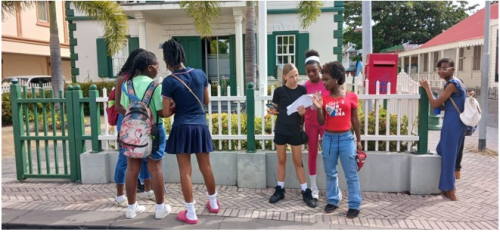
Throughout the week, participants were immersed in Dutch through engaging, hands-on activities. They gave presentations about themselves, created a vlog during a scavenger hunt in Philipsburg, followed a recipe to make a fruit bowl, learned basic woodworking by making a tangram, and practiced interview and acting skills.
During Friday’s exhibition, students enthusiastically shared their work with parents and representatives of the Ministry of Education, Culture, Youth and Sport (MECYS). All participants said they would recommend the camp to their friends, and most reported feeling more confident in Dutch and better prepared for high school. Parents also gave the camp high marks, praising the creative approach to language learning, with several suggesting it should have lasted longer.
SVOBE appreciates this valuable feedback and thanks MECYS for its financial support, as well as the dedicated teachers Soniëlle Petres, Jessica Boldewijn, and Taryn Hassell, and coordinators Shanella Petrona and Saskia Kliphuis for their creativity, energy, and commitment.

$52 Million Point Blanche Prison Project faces questions over shifting timeline.

~Earlier plans projected completion by the end of 2027, while the January groundbreaking announcement now gives construction approximately three years.~

prisontimeline14072026PHILIPSBURG:--- The groundbreaking for the long-awaited new Point Blanche Prison was held on January 15, 2026, but documents reviewed by SMN News show that the publicly announced timeline for the project has changed significantly from the schedule presented when Phase 2 was launched in November 2024.

The project is being implemented by the United Nations Office for Project Services, UNOPS, as part of the Ministry of Justice’s broader Detention Sector Reform Program.

According to the official January 2026 announcement, the new prison represents a joint investment of US$52 million by the Government of St. Maarten and the Netherlands’ Ministry of the Interior and Kingdom Relations.

The facility is expected to cover approximately 10,000 square meters, consisting of a four-story main building, and accommodate as many as 196 inmates, more than doubling the country’s current detention capacity.

However, the timeline now being presented deserves close public scrutiny.

Earlier Completion date no longer reflected

Government information released on November 18, 2024, described Phase 2 as a construction project with an intended duration of approximately 35 months.

At that time, construction was expected to begin in 2025, with the first phase becoming operational by mid-2026 and final completion expected by the end of 2027.

The January 15, 2026, press release now states that construction is expected to take approximately three years. The announcement does not provide a specific contractual completion date or explain how the three-year construction period relates to the earlier end-of-2027 completion target.

That difference is significant.

If the three-year period is calculated from January 2026 groundbreaking, the project would extend beyond the previously announced end-of-2027 target. The Government and UNOPS should therefore clearly state the official commencement date, contractual completion date and whether the original project schedule has formally been revised.

Contractor Registered Months Before Groundbreaking

The Ministry of Justice announced that UNOPS contracted Artelia JV as the supervising engineer and CESAF JV as the construction contractor.

Commercial Register records show that CESAF JV Sint Maarten B.V. was incorporated on October 7, 2025, registered on October 14, 2025, and last amended on November 25, 2025.

The company has a nominal capital of 100 shares valued at US$1 each and lists its business addresses as Welfare Road 68, Unit 1, Cole Bay Lagoon.

The registered Managing Director is Diego Pol, an Italian national who entered the function on October 7, 2025, and is listed as solely authorized to represent the company.

The company’s registered activities include construction, utility works, road and civil engineering, plumbing, air-conditioning, electrical works, maintenance, importation of building materials and heavy equipment, and real-estate project management.

Joint Venture and International Experience

Research conducted in January identified the contractor structure as JV CESAF–COSEDIL, operating locally through CESAF JV Sint Maarten B.V.

The research found publicly available indications linking Italian company COSEDIL to an earlier prison project in Berat, Albania. It also identified a possible connection to a detention project in Fier, although the available information was insufficient to establish COSEDIL as the project’s principal contractor.

For the prison projects in Shkodër and Elbasan, the available documents identified other contractors.

The research did not establish wrongdoings by CESAF, COSEDIL, Diego Pol or the local joint-venture company.

It did, however, note that publicly accessible UNOPS procurement notices did not clearly display the final contract-award details and recommended obtaining the official UNOPS award documentation and contract summary to formally confirm the successful bidder and the precise scope of the contract.

Promise of Local Employment

The January announcement states that construction will employ an average of more than 100 workers daily, combining local labor with international expertise.

Government also said the contractor and supervising engineer would prioritize local engagement, skills development and knowledge transfer, while using local suppliers, subcontractors and service providers.

Those commitments should now be supported by measurable figures.

The public should be told how many workers are currently employed, how many are St. Maarten residents, which local subcontractors have been engaged and what percentage of the construction expenditure will remain in the local economy.

Facility designed for 196 Inmates

The new facility is expected to include healthcare services, a basic mental health unit, family-visitation areas, indoor and outdoor recreational spaces, workshops and classrooms.

Vocational training is expected to include carpentry, welding, and mechanics.

The building is also designed to withstand Category 5 hurricanes and seismic activity, using reinforced concrete and corrosion-resistant materials suitable for the coastal environment. Natural ventilation and energy-efficient design measures are also included.

These specifications are important, but the immediate issue is whether the work is advancing according to an approved and publicly accountable schedule.

Ground Was Broken—Now the Public Needs a Construction Schedule

The January ceremony was described as the official launch of construction.

Six months later, the Government and UNOPS should disclose the current stage of work, the agreed contractual milestones and the confirmed completion date.

The questions are straightforward:

Has site preparation been completed? Has structural construction begun? Is the project operating within the US$52 million investment? Have there been changes to the scope or schedule? Does the end-of-2027 completion date still apply, or has it been replaced by a later target?

The new Point Blanche Prison is not an ordinary building project. It is being presented as the infrastructure solution to St. Maarten’s longstanding detention crisis.

With US$52 million committed, capacity planned for 196 inmates and construction now officially underway, the country is entitled to more than ceremonial assurances.

It is entitled to a clear timeline, transparent contract information and verifiable progress.

Subcategories