Pointe Blanche Prison at Breaking Point: Overcrowding Now Undermining Justice System.

~Cell Shortages force release of suspects while rehabilitation programs continue to disappear~
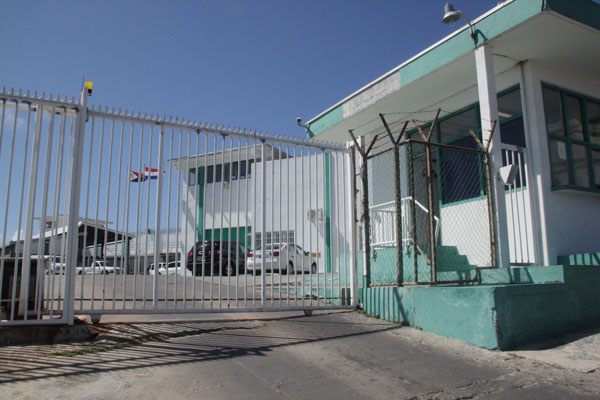
 

pointblachepprison31012011PHILIPSBURG:--- The crisis at the Pointe Blanche House of Detention has reached a critical stage, with severe overcrowding, deteriorating detention conditions, and the collapse of meaningful rehabilitation programs now directly affecting the administration of justice in St. Maarten.

Recent confirmation from the Prosecutor's Office has revealed that the prison's lack of available detention space is no longer merely an operational challenge—it is influencing judicial decisions, forcing prosecutors to seek the release of suspects who would otherwise remain behind bars pending trial.

In a recent court matter, the Prosecutor's Office openly acknowledged that the suspension of a suspect's pre-trial detention was requested because of the lack of detention capacity at Pointe Blanche Prison. Prosecutors further admitted that these decisions are becoming increasingly common due to the chronic shortage of available cells.

Rather than requesting an outright release, prosecutors sought a suspension of detention under strict court-imposed conditions, including the surrender of the suspect's passport and a restraining order protecting the alleged victim. The Court approved the request.

The admission has once again placed the spotlight on the worsening conditions inside the country's only correctional facility.

Overcrowding Now Dictating Criminal Justice

For years, successive governments have acknowledged that Pointe Blanche suffers from overcrowding, deteriorating infrastructure, staff shortages, and aging facilities. However, the latest disclosure demonstrates that the problem has escalated to the point where prison capacity is now influencing decisions that should be based solely on legal considerations.

Legal professionals warn that detention space should never become the determining factor in whether a suspect remains in custody. Yet the Prosecutor's Office has confirmed that operational realities are forcing difficult decisions to ensure that the limited number of available cells are reserved for the most urgent cases.

The situation has raised concerns among victims, law enforcement officials, and the wider public, who increasingly question whether the justice system can function effectively while its correctional facility operates beyond capacity.

Isolation cells no longer available for discipline

One of the clearest signs of the prison's overcrowding is the reported use of isolation cells to house members of the general inmate population.

Sources familiar with conditions inside Pointe Blanche indicate that cells originally designed for disciplinary segregation or inmate protection are now occupied simply because there are no other spaces available.

This means prison management reportedly has little or no dedicated disciplinary housing left.

When inmates become involved in fights, assault other prisoners, or violate prison regulations, correctional officers are often unable to isolate them as intended because the segregation units are already full.

Instead, disciplinary options have become extremely limited, leaving officers with fewer tools to maintain order inside the facility.

Correctional experts warn that this not only undermines prison discipline but also increases security risks for both inmates and prison staff.

Rehabilitation has Become an afterthought

Equally troubling is the continued decline of rehabilitation within Pointe Blanche.

While incarceration is intended to protect society, correctional institutions are also expected to prepare offenders to successfully reintegrate into the community upon release.

That objective appears to be slipping further out of reach.

Information obtained regarding current prison operations indicates that many of the educational and vocational programs that once formed part of inmate rehabilitation have either been reduced or discontinued altogether.

The General Educational Development (GED) program, which previously provided inmates with an opportunity to earn an internationally recognized academic qualification, is reportedly no longer available.

Traditional educational instruction and structured vocational training have also largely disappeared.

Instead, many of the activities currently offered inside the prison are supported through European Union-funded initiatives, including photography, modeling, and other enrichment activities.

While those programs provide inmates with constructive engagement, critics argue they cannot replace comprehensive rehabilitation initiatives designed to reduce recidivism.

Meaningful correctional rehabilitation normally includes literacy education, vocational certification, trade skills, anger management, substance abuse treatment, life-skills coaching, employment preparation, and psychological counseling.

Without those opportunities, inmates leave prison with little improvement in their educational or employment prospects, increasing the likelihood that they will reoffend.

An Expensive Cycle of Reoffending

Correctional specialists have long maintained that prisons should do more than simply warehouse offenders.

Every inmate who leaves prison without education, vocational skills, behavioral intervention, or treatment represents a greater risk of returning to criminal activity.

The absence of meaningful rehabilitation creates a costly cycle in which offenders repeatedly enter and exit the justice system, placing continued strain on police, prosecutors, the courts, and correctional services.

Investing in rehabilitation has consistently been shown internationally to reduce repeat offending while improving public safety.

Years of warnings, few lasting solutions

The problems facing Pointe Blanche are far from new.

Over the years, reports have highlighted deteriorating infrastructure, inadequate maintenance, overcrowded housing units, staffing shortages, damaged facilities, and the urgent need for prison modernization.

Despite repeated promises by successive administrations, many of those longstanding deficiencies remain unresolved.

The prison continues to operate under conditions that challenge both security and rehabilitation, while correctional officers are expected to manage increasingly complex inmate populations with limited resources.

Justice system feeling the consequences

The Prosecutor's Office's recent admission makes clear that the consequences of prison overcrowding now extend beyond the prison walls.

The lack of available detention space is affecting prosecutorial decisions, influencing court proceedings, and raising legitimate concerns among victims who expect accused persons to remain in custody while awaiting trial.

At the same time, the lack of meaningful rehabilitation means many inmates leave prison no better equipped for life than when they entered.

Government faces growing pressure

The worsening situation raises several pressing questions for government:

  • When will additional detention capacity become available?
  • Why are isolation cells being used to house the general prison population?
  • Why have accredited educational programs such as GED disappeared?
  • What concrete rehabilitation strategy exists beyond externally funded projects?
  • How will government restore vocational training, education, and behavioral treatment programs?
  • What long-term plan exists to ensure that overcrowding no longer compromises the administration of justice?

The Pointe Blanche House of Detention was never intended to operate under the conditions now being described. Yet overcrowding has reached a point where correctional management, rehabilitation, and even criminal prosecutions are being affected.

The prison crisis is no longer simply a correctional issue. It has become a national justice issue, one that directly impacts public safety, victims' rights, and confidence in St. Maarten's criminal justice system. Without immediate investment in expanded detention capacity, modern facilities, and meaningful rehabilitation programs, the crisis at Pointe Blanche is likely to deepen, with consequences extending far beyond the prison gates.


How Sint Maarten's National Budget is Prepared: Understanding the Budget Process.

marinkagumbs14072026PHILIPSBURG:---  As public discussion about the National Budget continues, the Minister of Finance believes it is important to clearly explain how the Government’s budget is prepared and what role each part of Government plays in that process.
Preparing the National Budget is a shared responsibility. The Ministry of Finance coordinates the process, but it does not prepare budgets for other Ministries or decide how much money each Ministry gets. Those decisions are made together by the Council of Ministers, in line with the Comptabiliteitslandsverordening.

To support a better understanding of the process, the Minister of Finance provides the following step-by-step overview.

Step 1: Strategic Budget Session

The budget process begins with a strategic session involving Ministers, Secretaries General, Financial Controllers, Cabinet staff, the Financial Policy Department (FBBB), and the Policy-Based Budgeting (PBB) Project Team. During this session, Government's priorities, national needs, and available financial resources are discussed. Ministers present the priorities of their respective Ministries and identify the resources required to achieve their policy objectives.

Step 2: Council of Ministers Establishes the Budget Framework

Based on these discussions, the Council of Ministers collectively determines the Government's policy priorities, strategic objectives, budget parameters, and financial allocations for the upcoming fiscal year.

This is a collective decision-making process in which Ministers advocate for their Ministries while balancing the needs of Government as a whole, within the available fiscal space. For example, during one budget cycle, the Ministries of VSA and TEATT agreed to reduce portions of their own budget requests so that funding could be made available for a priority within the Ministry of Justice.Once approved, these allocations become the official budget parameters within which each Ministry must prepare its budget. These are not recommendations. They form the financial framework for the National Budget.

Step 3: Ministries Prepare Their Budgets

Each Ministry prepares its own budget based on the priorities and financial allocations approved

by the Council of Ministers. Every Minister remains responsible for determining how the approved resources will be utilized to achieve the Ministry's policy objectives. The Ministry of Finance does not prepare another Ministry's budget. Once completed, each Ministry submits its budget to the Ministry of Finance for consolidation.


Step 4: Ministry of Finance Coordinates and Consolidates the Budget

The Ministry of Finance reviews each Ministry's submission to ensure that it:

  • complies with the financial parameters approved by the Council of Ministers;
  • is complete and internally consistent;
  • is fiscally sustainable; and
  • can be incorporated into the National Budget.

This is a coordination function—not one of rewriting or reducing another Ministry's budget. If a Ministry submits a budget exceeding its approved allocation, it cannot simply be incorporated into the National Budget. Since the National Budget is one consolidated financial document, any increase by one Ministry affects the Government's overall expenditure. Unless additional revenue is identified or expenditure is reduced elsewhere by a decision of the Council of Ministers, the budget would no longer be balanced.

The Ministry of Finance therefore works with Ministries to bring their submissions within the agreed framework. These adjustments implement decisions already made by the Council of Ministers; they are not unilateral budget cuts by the Minister of Finance.

Meeting submission deadlines is equally important. The National Budget cannot advance until every Ministry has submitted its budget. Delays by one Ministry delay the entire budget process. During the 2026 and 2027 budget cycles, the Ministry of Finance, together with the Financial Policy Department (FBB) and the Policy-Based Budgeting (PBB) Project Team, worked closely with all Ministries to provide technical guidance, improve planning, and strengthen budget submissions.

Step 5: Internal Legal Review

Once the draft National Budget has been consolidated, it is submitted to the Department of Legal Affairs for legal review. This review ensures that the draft budget complies with all applicable legal and procedural

requirements before it is presented to the Council of Ministers for approval.

Step 6: Council of Ministers Approves the Draft National Budget

Following the legal review, the draft National Budget is submitted to the Council of Ministers. The Council reviews the complete budget package and, if satisfied, approves it as the Government's official draft National Budget. This approval is a collective decision of Government.

Step 7: External Review by the CFT and Council of Advice

After approval by the Council of Ministers, the draft National Budget is submitted for external review by:

  • the Committee for Financial Supervision (CFT); and
  • the Council of Advice (RvA).

Each institution reviews the budget within its statutory mandate and may provide comments, advice, or recommendations.

Step 8: Processing of External Advice

The Ministry of Finance coordinates the incorporation of the recommendations received from the CFT and the Council of Advice.Where amendments are required, these are made to ensure that the draft budget remains legally compliant, fiscally responsible, and consistent with the recommendations received.

Step 9: Final Legal Review

Following the incorporation of the external advice, the revised draft National Budget is returned to the Department of Legal Affairs for a final legal review. Legal Affairs verifies that all required amendments have been correctly incorporated and confirms that the budget is legally and procedurally sound before proceeding to Parliament. This serves as an additional safeguard to ensure that the budget is complete, consistent, and

compliant with all applicable legal requirements.

Step 10: Submission to Parliament

After completion of all required reviews and approvals, the draft National Budget is submitted to Parliament through the Governor. Parliament then debates, considers, and ultimately decides on the approval of the National Budget in accordance with its constitutional procedures.

Clarifying Common Misconceptions

  • Misconception: The Minister of Finance has the authority to unilaterally determine another Ministry's budget.
  • Fact: Financial allocations are determined collectively by the Council of Ministers. Each Ministry prepares and executes its own budget. The Ministry of Finance coordinates the budget process, ensures compliance with the framework approved by the Council of Ministers, and consolidates the National Budget in accordance with the Comptabiliteitslandsverordening.
  • Misconception: Any increase requested by a Ministry should automatically be reflected in the National Budget.
  • Fact: Budget requests are assessed against the financial framework approved by the Council of Ministers, the country's available fiscal space, and the Ministry's demonstrated ability to effectively utilize additional resources. Not every request can or should be accommodated.
  • Misconception: If a Ministry requests additional funding, it is because its existing budget is insufficient.
  • Fact: Budget requests are evaluated alongside historical expenditure patterns. In some cases, Ministries requesting additional funding have not fully utilized or absorbed the budgets already allocated to them in previous fiscal years. Strengthening budget execution remains an important consideration when assessing requests for additional resources.
  • Misconception: Every proposed initiative can be executed immediately if additional funds are made available.
  • Fact: Successful implementation depends on more than funding alone. Some initiatives require enabling legislation, approved policies, organizational restructuring, procurement processes, or specialized personnel before they can be effectively executed. Where these prerequisites are not yet in place, additional funding alone will not result in successful implementation.
  • Misconception: The Ministry of Finance cut Ministry budgets during the 2026 and 2027 budget processes.
  • Fact: No Ministry's budget was reduced. Every Ministry received an increase compared to the previous fiscal year. Discussions centered on ensuring that requested increases remained within the financial allocations and budget parameters collectively approved by the Council of Ministers.

The Minister of Finance emphasizes that the budget process depends on every Ministry fulfilling its responsibilities within the framework approved by the Council of Ministers. Each Ministry prepares and executes its own budget, while the Ministry of Finance coordinates the process.

Respecting the approved budget ceilings and timelines is essential to preserve the credibility of the National budget and prevent unnecessary delays. No individual Minister is above the collective decisions of the Council of Ministers. The Ministry of Finance remains committed to supporting Ministries in strengthening financial planning, improving budget quality, and ensuring that public funds are managed responsibly,

transparently, and in accordance with the law.

CPS COVID Vaccines Available for Adults and Children on Friday. Call for an Appointment.

PHILIPSBURG;--- (DCOMM) – The Collective Prevention Services (CPS), COVID, would like to inform the general public that the clinic at the CPS Offices at the Vineyard Building Office Park in Philipsburg, is open for COVID vaccines by appointment only, and the next available date is Friday, July 17th.

The CPS clinic is open for COVID vaccines for persons aged 12 and older on Friday, July 17, 2026, from 10:00 AM to 11:30 AM.

Due to limited supply, CPS is requesting persons to call or email for an appointment by calling 914 (option 4) or 542-1570, or via email This email address is being protected from spambots. You need JavaScript enabled to view it.

The booster is entirely free of charge and voluntary.

Please bring your vaccination card and a form of Identification (ID) when you have an appointment.

The COVID-19 virus has not disappeared. While the peak of the pandemic is in the past, the virus remains an active presence.

Routine prevention remains essential for public safety.

Tzu Chi donates 57,258 bags of rice to families in need over past 10 years.

PHILIPSBURG:--- Tzu Chi Taiwan's support through the "Love From Taiwan" Rice Donation Program has enabled the Buddhist Compassion Relief Tzu Chi Foundation Sint Maarten to assist 178,414 individuals and 64,620 families over the past ten years.

The figures were highlighted during a visit by Ambassador Edward Ling Wen Tao, Ambassador of the Republic of China (Taiwan) to St. Kitts and Nevis, to the Tzu Chi Center on July 10.

The generosity of Taiwan has resulted in 29 containers of Love Rice being delivered to Sint Maarten since 2016, providing relief to families throughout Sint Maarten and neighboring Caribbean islands.

The foundation reported receiving 29 containers of Love Rice and distributing 57,258 bags of 10-kilogram rice.

The program has assisted 64,620 families and benefited 178,414 individuals. In addition, 539 schools, churches, senior homes, shelters, and community institutions have received support through the initiative.

Tzu Chi also reported 23,458 volunteer participations dedicated to serving communities through the program.

According to the foundation, the rice donations have supported home visits, monthly relief distributions, emergency assistance efforts, schools, and charitable organizations throughout the region.

Tzu Chi Foundation Sint Maarten, Commissioner Sandra Cheung said the donations represent more than food assistance. "Every bag of rice we distribute carries not only nourishment but also the compassion and friendship of Taiwan. On behalf of every family we have served and every volunteer who has dedicated their time, we offer our deepest gratitude to the Government and people of Taiwan for walking this humanitarian path with us over the past ten years."

Tzu Chi said it remains committed to continuing its humanitarian work and transforming Taiwan's support into assistance for families in need throughout the region.

Taiwan Ambassador visits Tzu Chi Center in St Maarten.

tzuchi14072026PHILIPSBURG:---- The Buddhist Compassion Relief Tzu Chi Foundation Sint Maarten welcomed Ambassador Edward Ling Wen Tao, Ambassador of the Republic of China (Taiwan), to St. Kitts and Nevis during a special visit to the Tzu Chi Center on July 10.

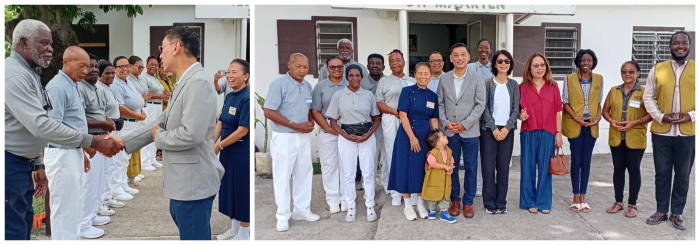
Ambassador Tao was accompanied by Madame Ambassador Madeline Liao and their secretary. The delegation was received by Tzu Chi volunteers and presented with a Gratitude Card in appreciation of Taiwan's continued support through the "Love From Taiwan" Rice Donation Program.

According to Tzu Chi, the visit provided an opportunity for volunteers to express their gratitude for the support received from the people and Government of Taiwan through Tzu Chi Headquarters in Taiwan.

"The visit was not simply a diplomatic courtesy. It was a heartfelt opportunity for Tzu Chi Sint Maarten volunteers to express their deepest gratitude for the compassion of the people and Government of Taiwan. Through Tzu Chi Headquarters in Taiwan, this generosity has crossed oceans and, over the past ten years, has been transformed into food, hope, and dignity for thousands of families throughout Sint Maarten and neighboring Caribbean islands."

During the visit, the ambassador toured the Tzu Chi Center, viewed photographs documenting ten years of humanitarian work, and learned how rice donations have supported vulnerable families, seniors, children, and community organizations throughout the region.

Volunteers also shared stories of recipients whose lives have been impacted through assistance made possible by donations from Taiwan.

Speaking on behalf of Tzu Chi Foundation Sint Maarten, Commissioner Sandra Cheung thanked the Government and people of Taiwan for their support.

"Every bag of rice we distribute carries not only nourishment but also the compassion and friendship of Taiwan. On behalf of every family we have served and every volunteer who has dedicated their time, we offer our deepest gratitude to the Government and people of Taiwan for walking this humanitarian path with us over the past ten years."

Tzu Chi said the visit highlighted the friendship between Taiwan and the people of Sint Maarten and reflected a shared commitment to serving people regardless of race, nationality, or religion.

As the foundation begins its next decade of service, it said it remains committed to continuing humanitarian assistance for families in need. "Compassion knows no borders, and love unites us all."


Subcategories